Resources®
Nature-inspired open-ended construction toy for play-based learning
Where Balance Meets Imagination
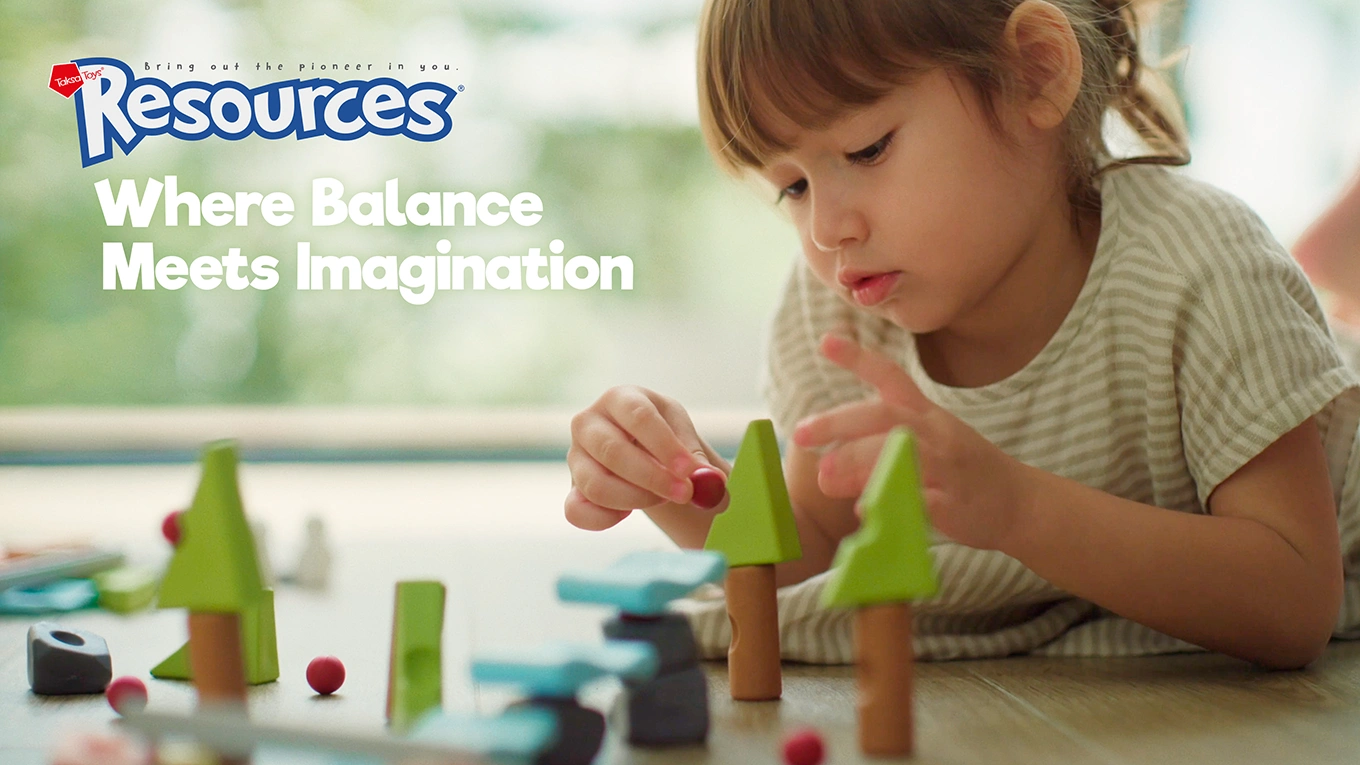
Resources® brings balance and imagination into the same act of play. Children build with pieces that respond directly to gravity, weight, and placement, while their symbolic shapes and colors help a structure become a landscape, a place, or a story.
Nothing is fixed in advance. A build may begin with a clear idea or with a single piece, then develop through observation, adjustment, and discovery.
No connectors. No fixed outcome. Only balance.
Every placement changes what happens next.
Resources® uses no connectors, magnets, or locking mechanisms. Each structure stands through the relationship between the shape, weight, angle, contact points, and position of its pieces.
When one piece is added, turned, or moved, weight shifts and contact points elsewhere in the structure may change. A placement that worked moments ago may need to be reconsidered, while a surface or angle that first seemed difficult to use may become the key to holding everything together.
Balance does not come from any one piece or from following a fixed method. It is discovered through the way every part works together.
A visual language inspired by the world around us
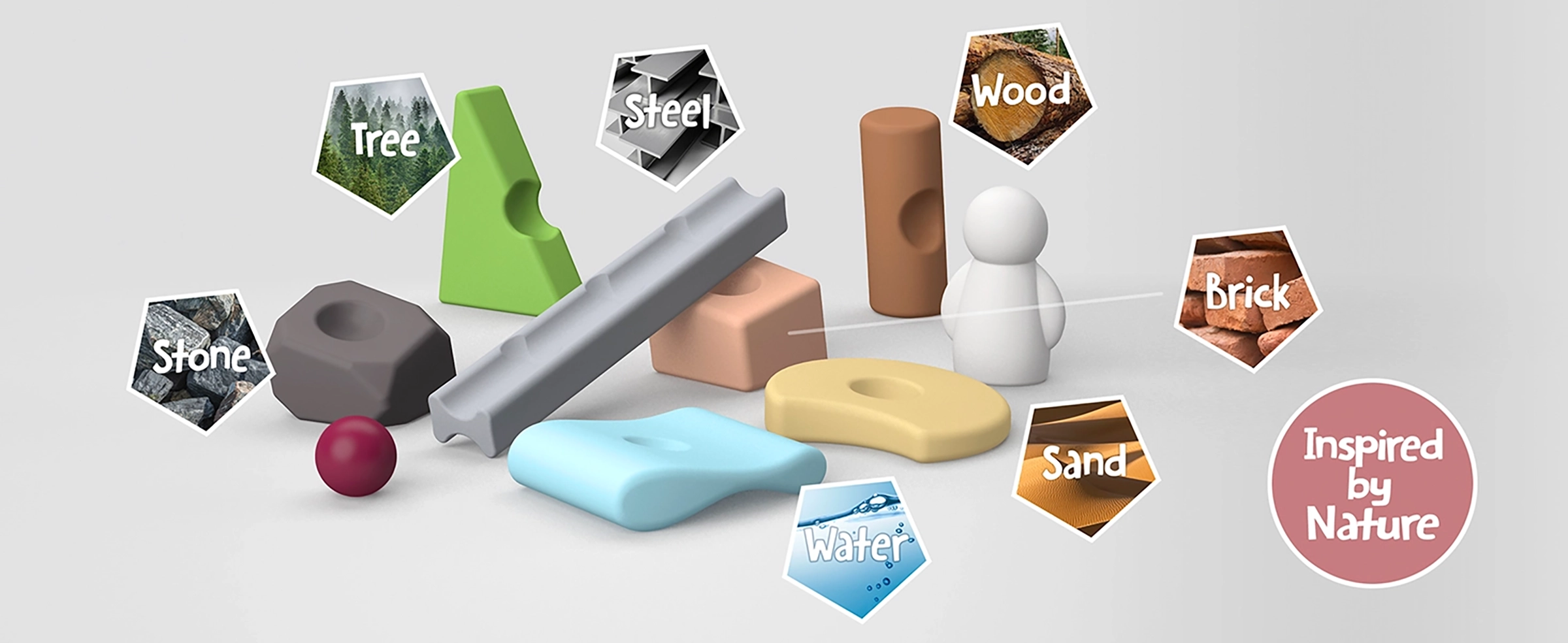
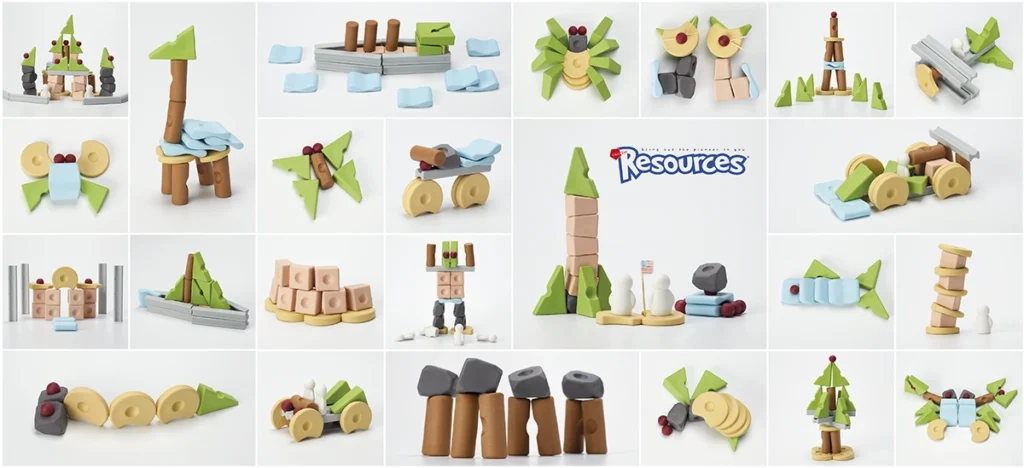
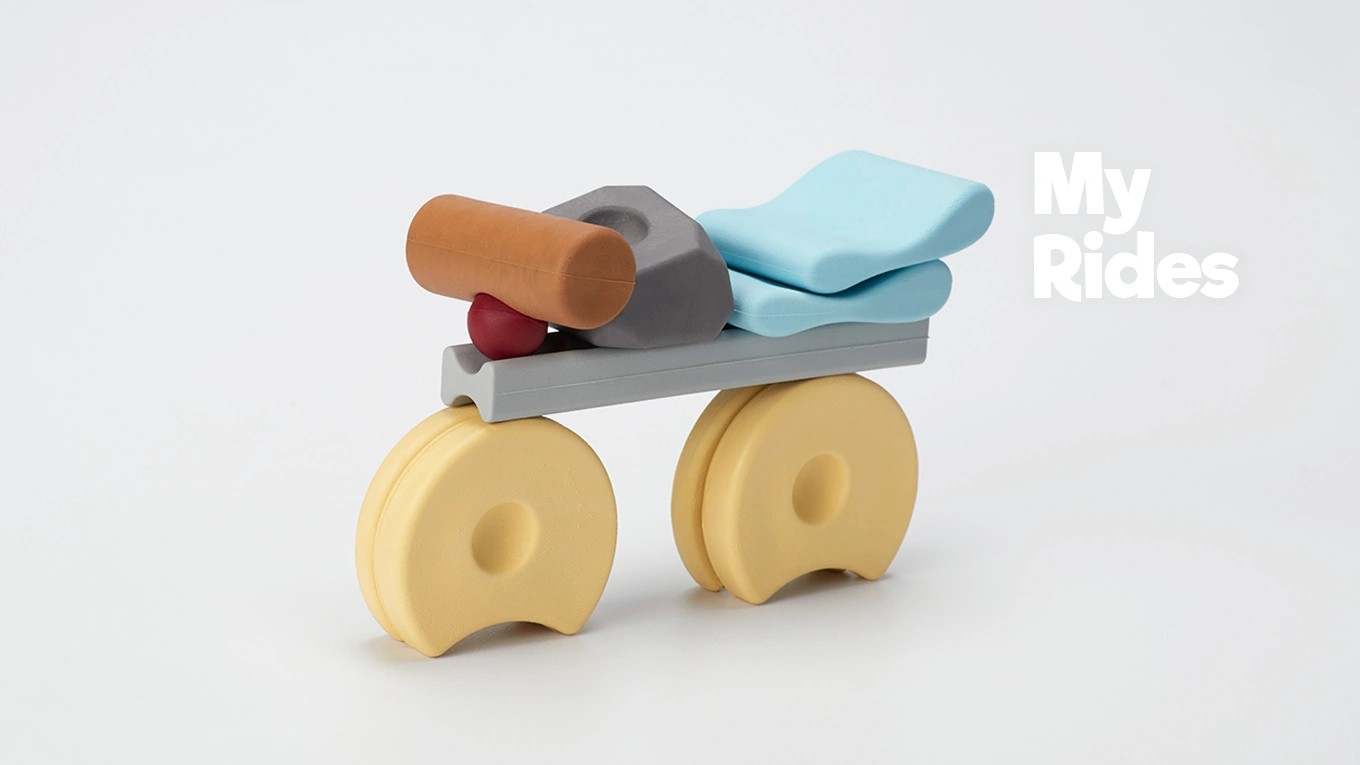
Resources® draws inspiration from familiar elements found in nature and everyday surroundings: Stone, Wood, Sand, Steel, Brick, Tree, and Water. These elements are expressed through simplified shapes and symbolic colors, accompanied by Balls that introduce movement and People figures that bring scale, roles, and stories into the play.
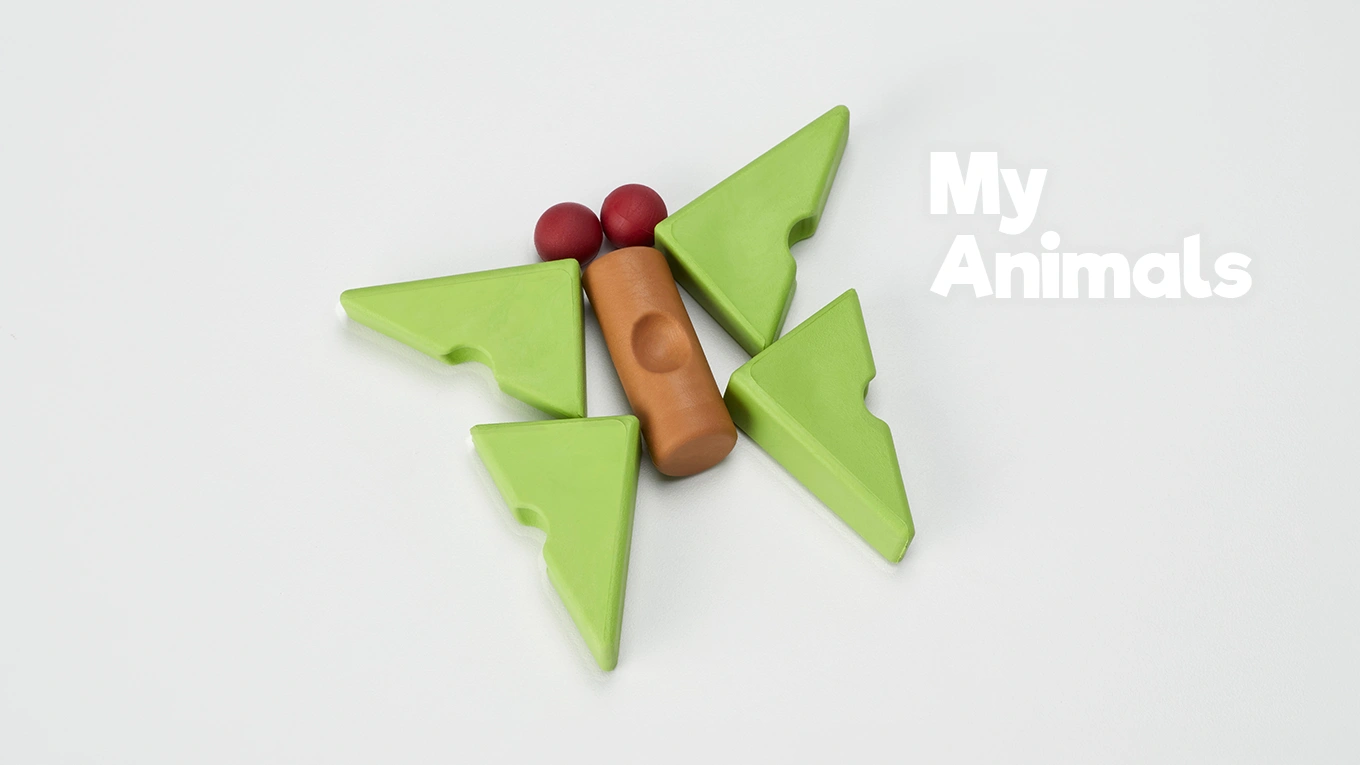
The forms suggest rather than define. Each piece retains something recognizable from its source while remaining open enough to take on a different role within a child’s construction.
Their names point to where the inspiration began, not how the pieces must be used.
Different placement, different result
No piece behaves exactly the same on every side. Some surfaces curve, some slope, and some meet another piece at only a small point, while another side may provide a more stable surface for supporting weight.
Flipping, turning, or repositioning a piece changes its support points, the direction of its weight, and its relationship to the rest of the structure. Even with the same selection of pieces, a different face, angle, or position can produce a noticeably different result.
A small adjustment may allow a piece to stand upright, lean, form a ramp, or support another part more effectively. Children can see directly how each placement affects what they are building.
A few pieces can set the scene
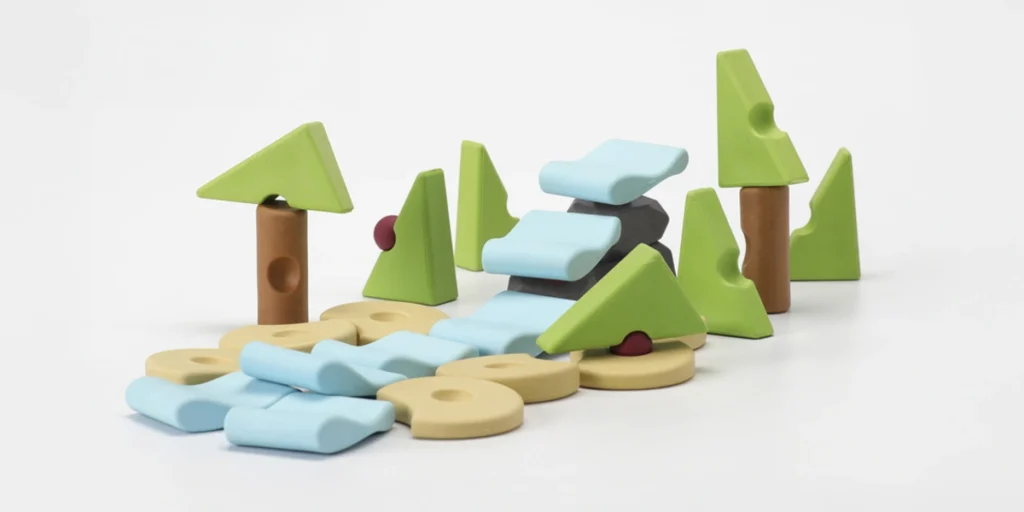
The symbolic shapes and colors of Resources® make it possible to build a recognizable setting without reproducing every detail realistically.
In this example, pale blue Water pieces cascade between Stones to form a waterfall. Sand pieces create the ground below, while Trees and Wood shape the surrounding landscape. With only a few simple elements, mountains, flowing water, and a natural setting begin to appear.
From there, the scene can continue to grow. Children might use Wood to build a bridge across the stream, add a path, redirect the water, or bring People into the landscape. What begins as a simple scene can gradually develop into a more complex structure and story.
Start with an idea, or start with a piece
Sometimes children begin with a clear picture of what they want to build. At other times, the idea appears only after the first piece has been placed.
Both are natural ways to begin. Children may work toward something they have already imagined, or allow the forms and relationships in front of them to suggest a direction they had not considered before.
The included Kick-Start Guideline introduces the pieces and offers simple starting points for building. The examples are not models that must be copied exactly. Children can change them, extend them, or use them as the beginning of something entirely their own.
When the structure begins to move
Movement is not separate from the build. It reveals how the structure works.
Slopes, gaps, and changes in height can become pathways for a Ball to roll through. The angle of a slope, the distance between pieces, and the position of each landing point all affect its speed, rhythm, and direction.
Children do not guide the Ball directly. They shape its movement through the structure they build.
When the Ball slows down, stops midway, changes course, or leaves the path, the structure provides immediate feedback. Children might raise one section, reduce a gap, alter a slope, or reposition the pieces around it. Movement turns the relationship between angle, height, distance, and gravity into something that can be observed and tested through play.
A Ball does not always have to roll. In some constructions, it may serve as a support, pivot, or point of balance between pieces, taking on a different role according to how it is placed.
People bring scale and story
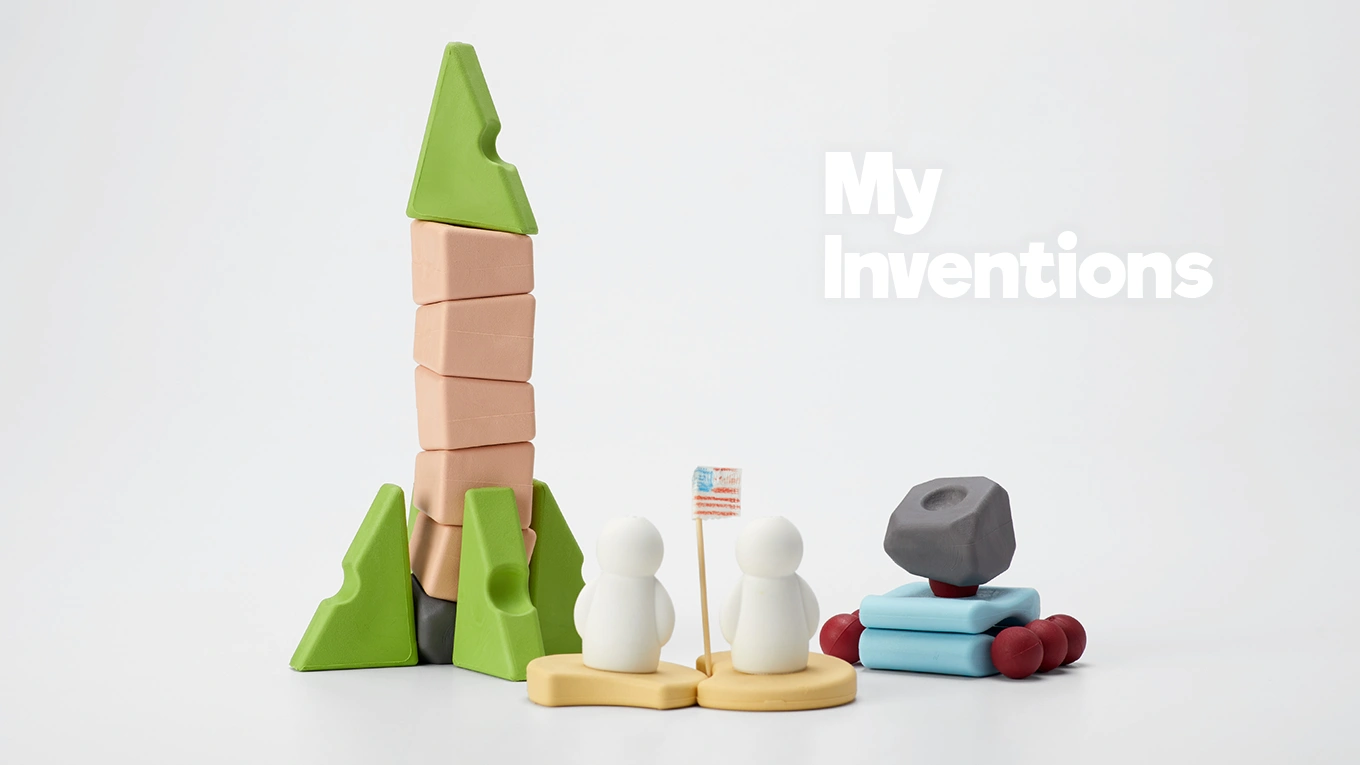
People figures add scale, purpose, and relationships to what has been built. Once someone enters the structure, a slope may become a path, an opening may become a room, and a bridge may have a traveler heading toward the other side.
Children may begin to imagine who lives there, where they are going, or what is happening around them. What began as an arrangement of forms can open into characters, relationships, and storytelling.
The People figures do not determine what the structure must mean. They invite children to imagine the life that might unfold within what they have created.
Problem solving in action
In Resources®, thinking happens through doing. It can be seen in the moments when children choose, pause, compare, and decide what to try next.
When the result differs from what they intended, children have an opportunity to identify what changed, consider alternatives, and test another approach. Problem solving becomes part of the play itself rather than a separate task or exercise.
Experience from one attempt can inform the next. What begins as trial may gradually become anticipation, as children start to notice patterns and consider what might happen before placing the next piece.
This kind of play creates opportunities to use planning, problem solving, spatial reasoning, concentration, and fine motor control within the same experience.
When children build together, the shared structure also creates space for conversation, waiting for one another, exchanging ideas, and adjusting their own choices in response to what others are doing.
Stay close without taking over
Adults do not need to place pieces, correct the structure, or suggest what should be built next. Staying nearby and observing gives children time to think, make decisions, and respond when things do not go as expected.
Parents and teachers can notice which pieces a child selects, where they pause, and how they change their approach when they encounter a problem. At certain moments, a simple question may help the child reflect on what is happening:
“What happened just now?”
“What changed?”
“What are you thinking of trying next?”
These questions do not point toward a particular solution or tell the child which piece to use. They invite children to look again, describe their thinking, and decide for themselves how to continue.
When the choices remain with the child, adults can see more clearly how thinking unfolds through play.
Read more about play and child development: How placing, adjusting, observing, and trying again create opportunities for children to think, solve problems, and make decisions. Why Play Matters in Child Development →
Made for real play
Resources® is made from high-quality, food-grade TPE. The material feels soft yet substantial, with slight flexibility while still holding its form for placing, stacking, turning, and making small adjustments.
Its material properties help pieces rest securely on angled surfaces and allow players to refine their placement gradually as constructions become more complex.
When a structure falls, the softer sound of the material is less likely to interrupt the flow of play. Children can pick up the pieces, make another adjustment, and try again without the fall feeling like an abrupt end to the experience.
The pieces are durable enough for repeated play at home, in schools, and in classroom settings. They can be cleaned with water or washed in a dishwasher.
Resources® has been tested to meet ASTM F963, EN 71, and applicable JFSL requirements.
Suitable for children ages 3 and up.




Different systems, one shared belief
Each TaksaToys system expresses the same belief: children can learn through direct experience, with each system offering a different way to engage.
- Resources® invites children to explore balance, placement, and how each choice changes what happens next.
- Arch-Kid-Tech® makes structural principles, alignment, and force transfer visible through building.
- LOCOMO® invites children to observe, interpret, and create stories with elements found in nature.
- Resources® Playground brings movement, coordination, and collaboration into play.
Explore TaksaToys’ approach to Play-Based Learning.
Resources®: Exploring balance through open-ended play
Build with imagination. Adjust through observation. See how balance takes shape.