
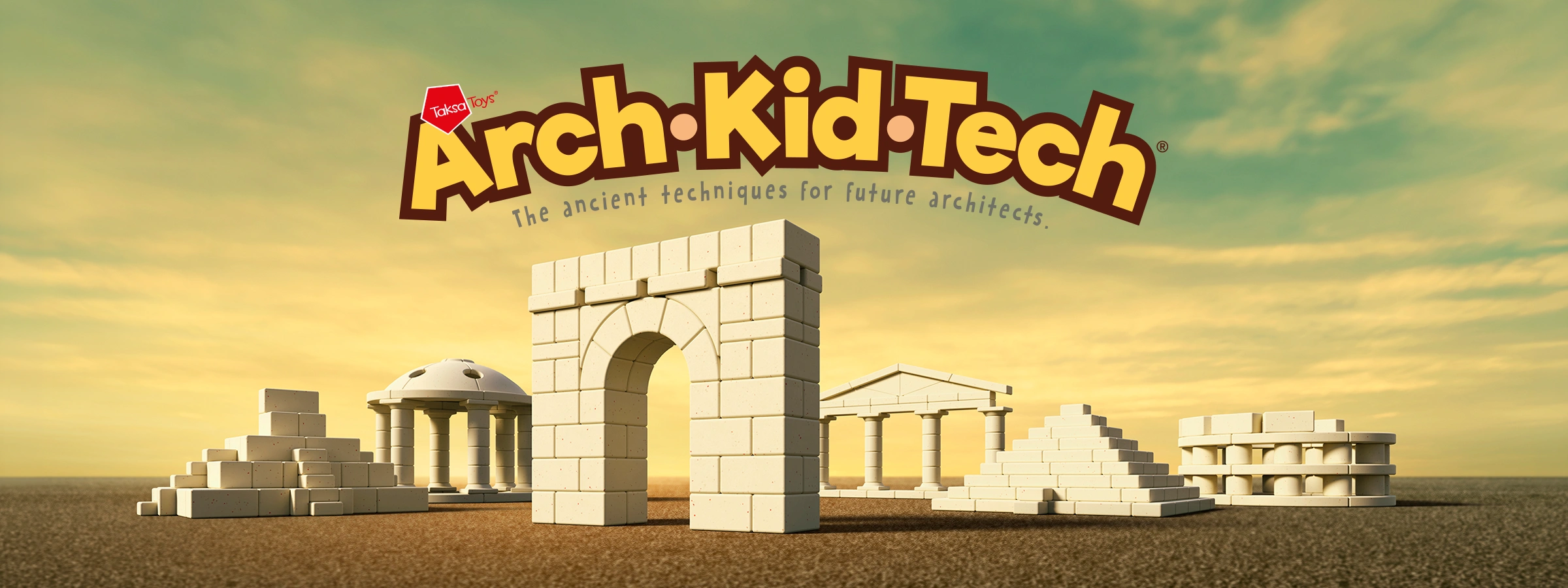
Arch-Kid-Tech®
An architectural building toy for exploring how structures work
Based on Timeless Principles
Arch-Kid-Tech® invites children to explore what makes a structure stand through careful stacking, precise alignment, and step-by-step construction.
Each set draws on structural principles found in architecture across civilizations, from pyramids and post-and-lintel construction to arches, domes, and repeated architectural elements used to enclose a large interior space.
These forms were chosen both for their memorable appearance and for the distinct ways they reveal load, alignment, and force transfer.
Play begins with the illustrated building guide included in each set. As children follow the sequence, they become familiar with the shapes, positions, and roles of the pieces. They can see why certain parts must be placed first, why others require precise alignment, and how a structure stands only when all its parts work together as intended.
What they build is more than an architectural model. It allows them to see how a structure works through the act of building.
No connectors. No hidden support. Only structure.
Arch-Kid-Tech® uses no magnets, locks, or hidden mechanisms to hold the pieces together. Each structure must stand through direct placement alone. The pieces are stacked and set against one another, relying on form, position, and the transfer of load to the supports below.
Behind every placement is something unseen but always present: gravity. When form, position, and alignment work together, the load is transferred through the structure to its base. When they do not, the structure cannot carry the load as intended.
Because no locking mechanism holds the pieces in place, the structural principles remain visible in what stands before the builder.
Different structures carry loads in different ways
In some structures, load travels vertically through pieces stacked one above another. Others use form to redirect forces toward supports positioned elsewhere.
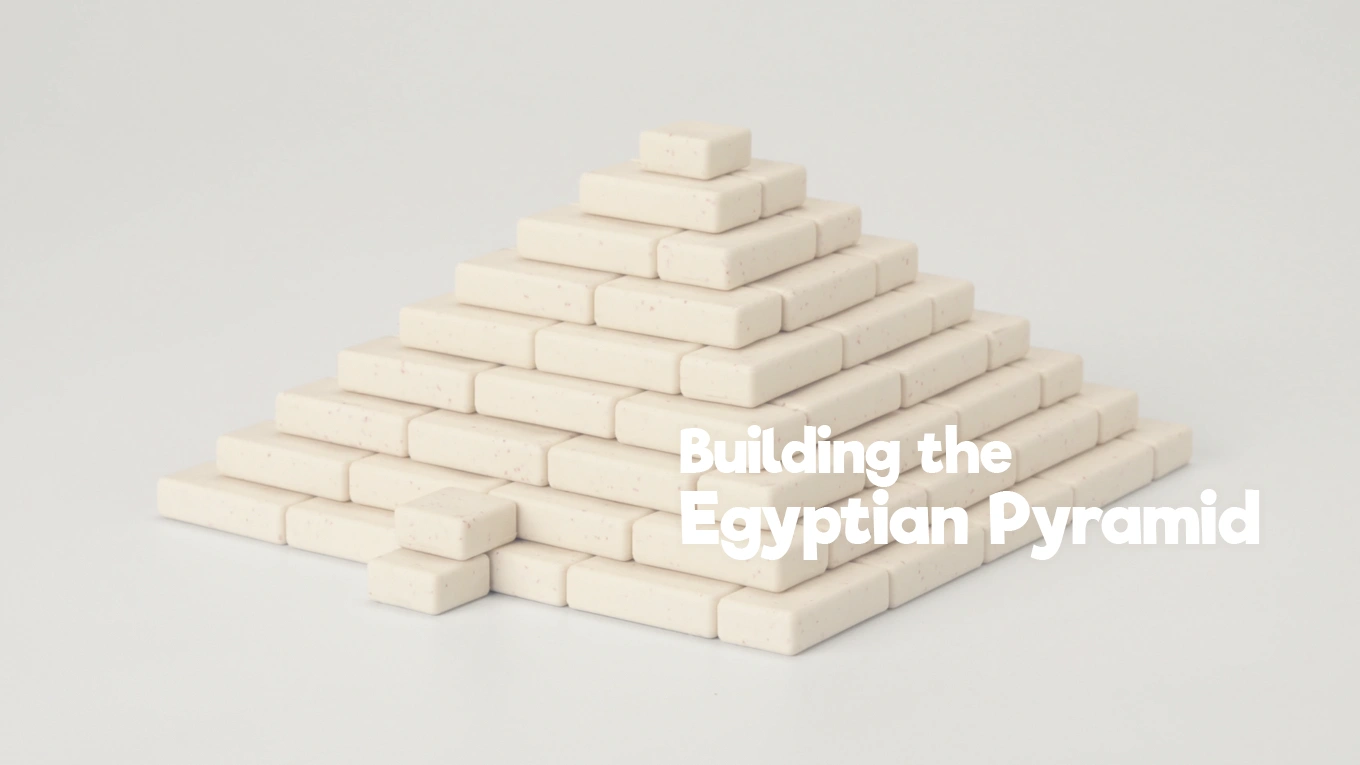
A pyramid begins with a broad base, with each successive level becoming smaller as the structure rises. Its ordered layers carry the load of the upper sections downward through the structure. The stability of everything above depends on the order and precision of what has already been built below.
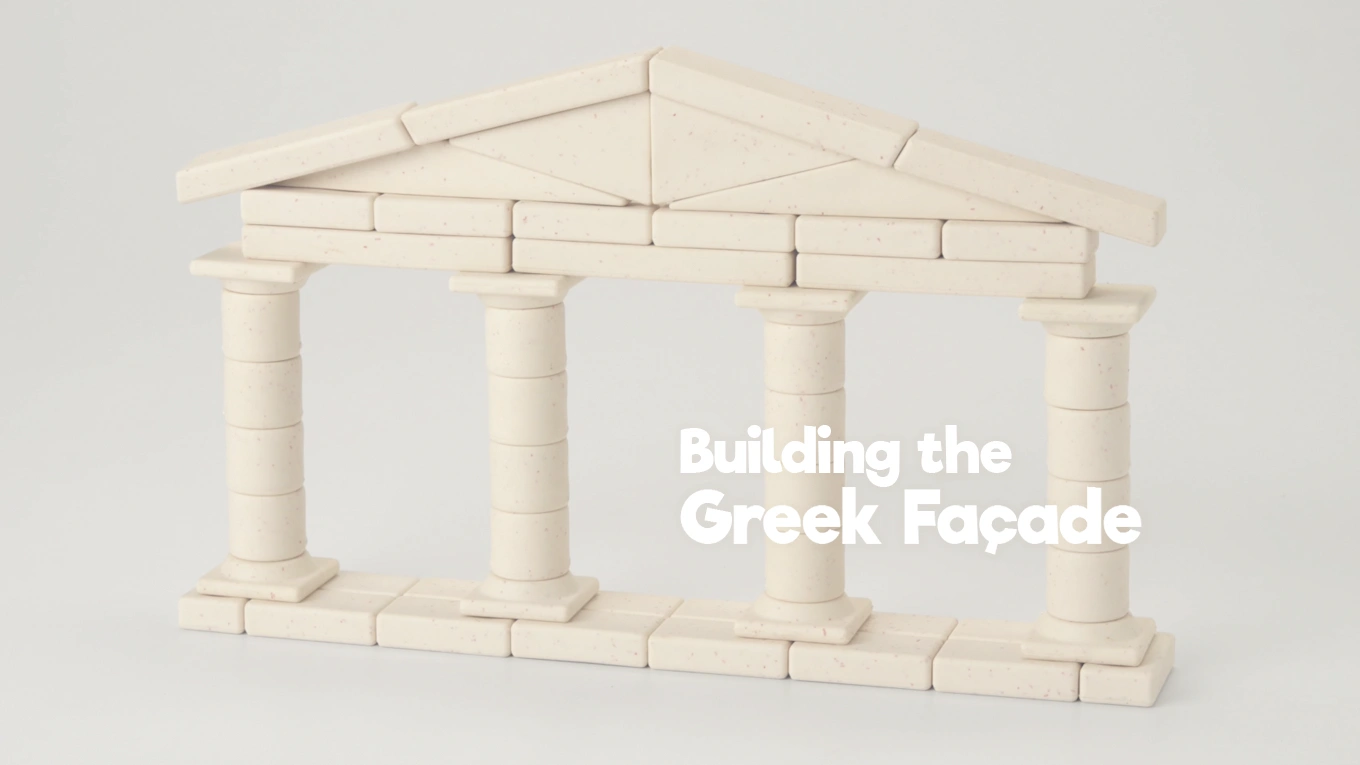
Post-and-lintel construction reveals the relationship between load, span, and support. Columns must be placed at the correct distance and alignment so that the horizontal lintels above can rest securely and transfer their load to the base.
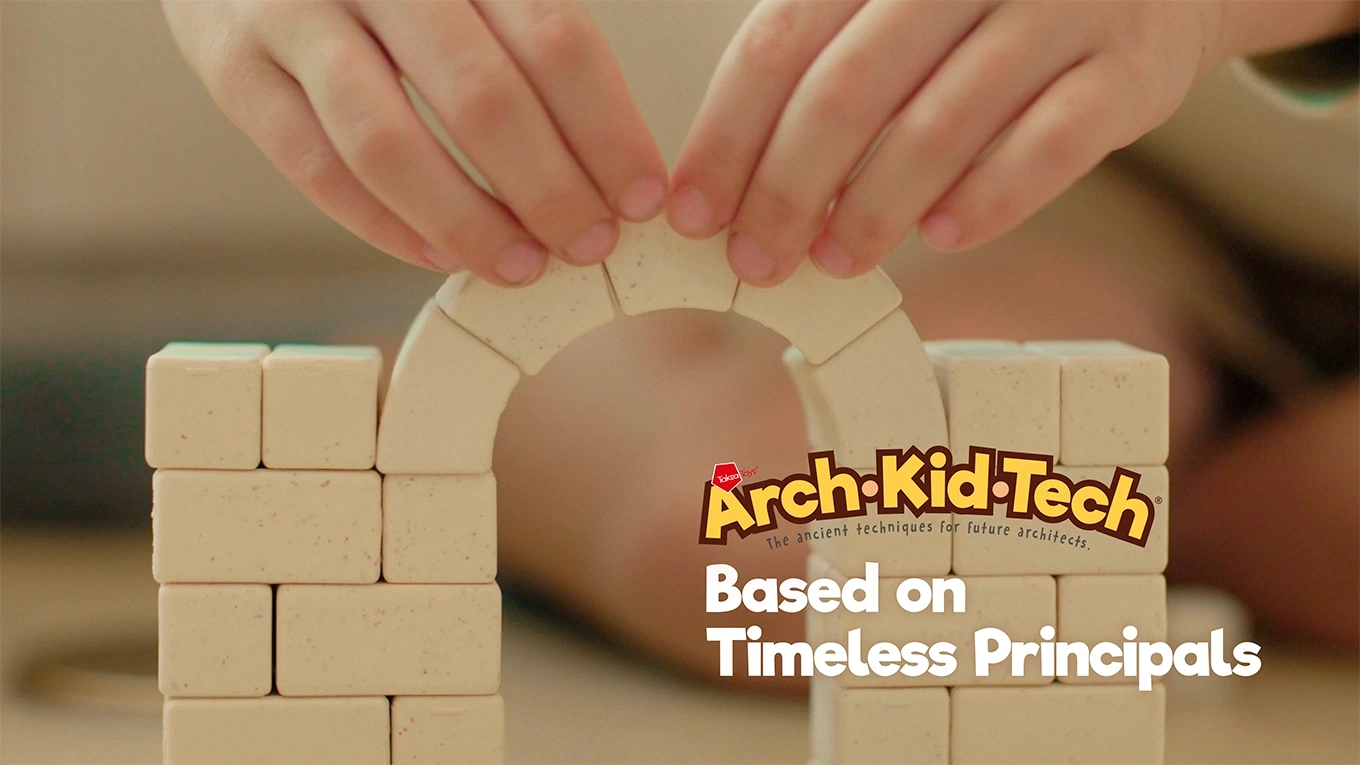
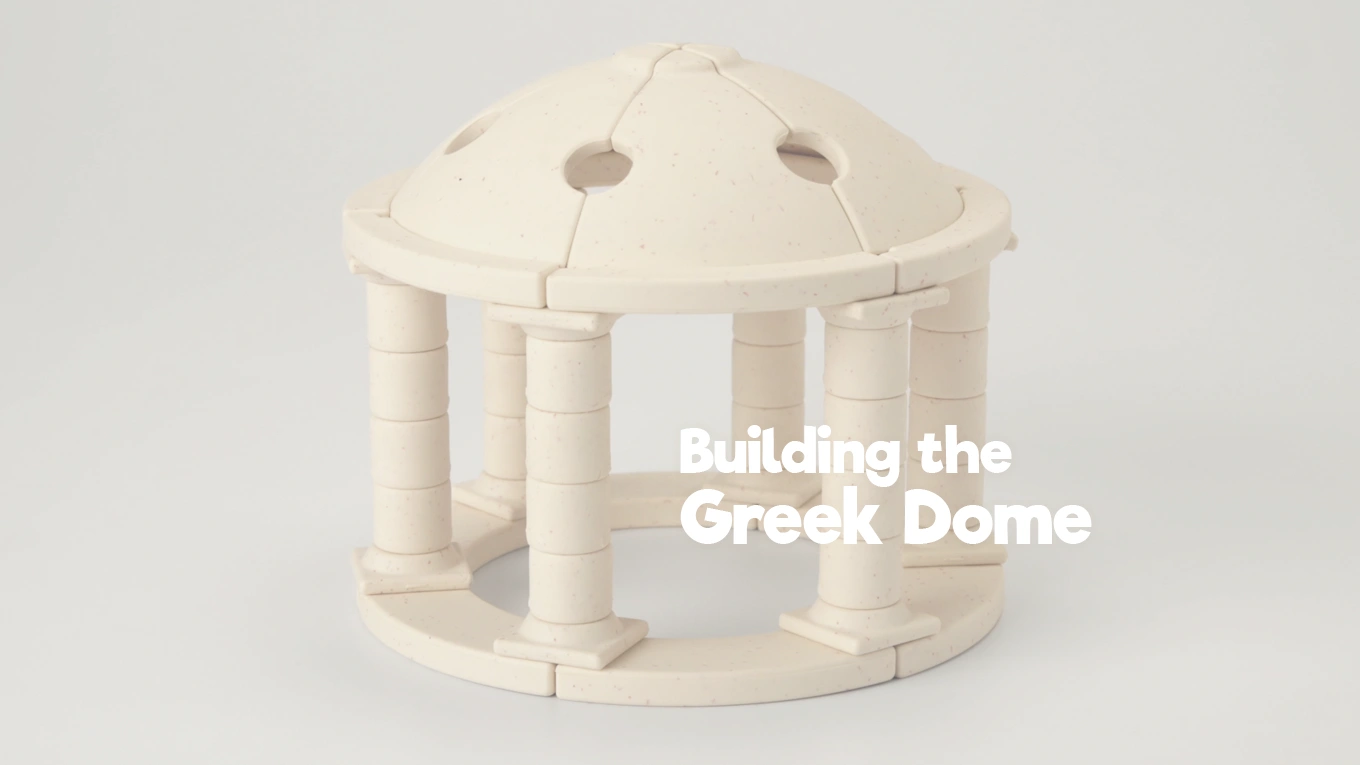
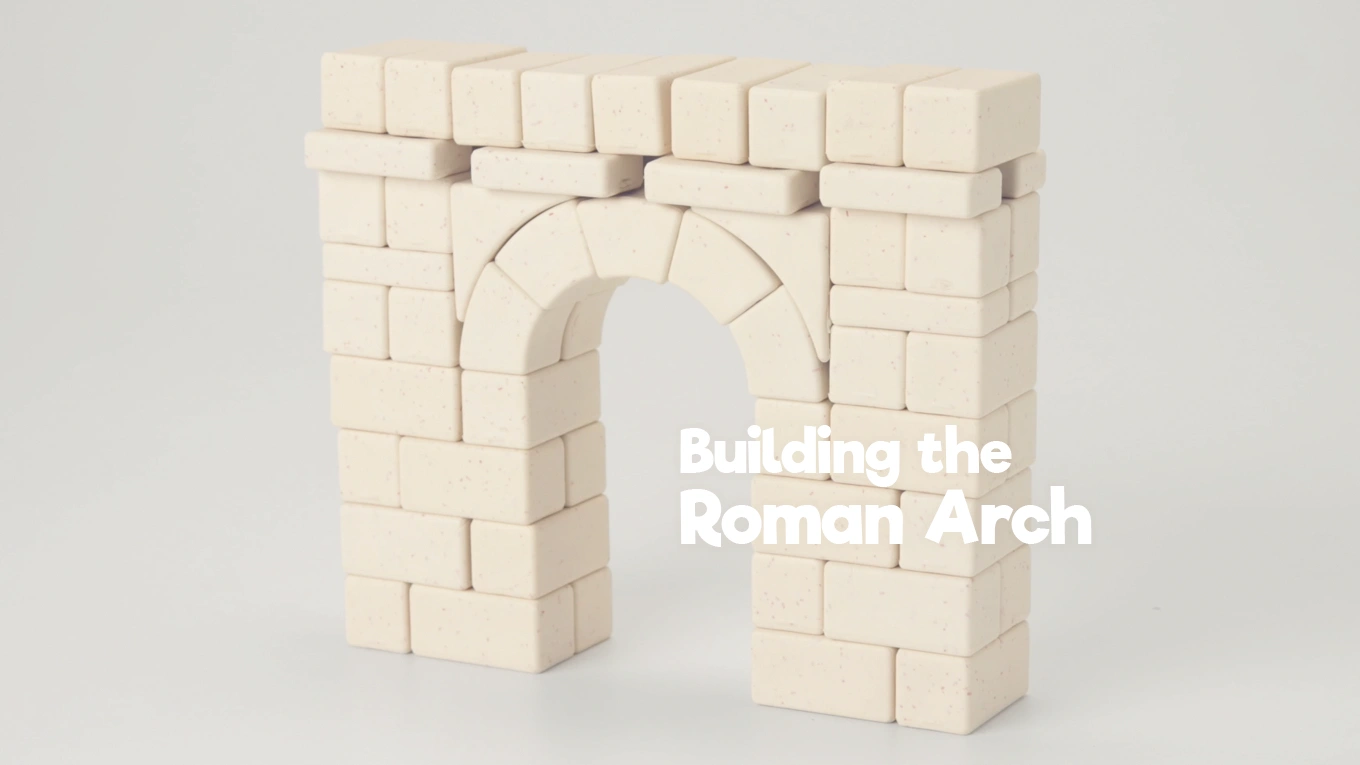
Arches and domes work differently. Wedge-shaped pieces press against one another along a curve, redirecting forces toward their supports. Within an arch, the keystone completes the curve and helps the separate pieces carry the load together as one structure.
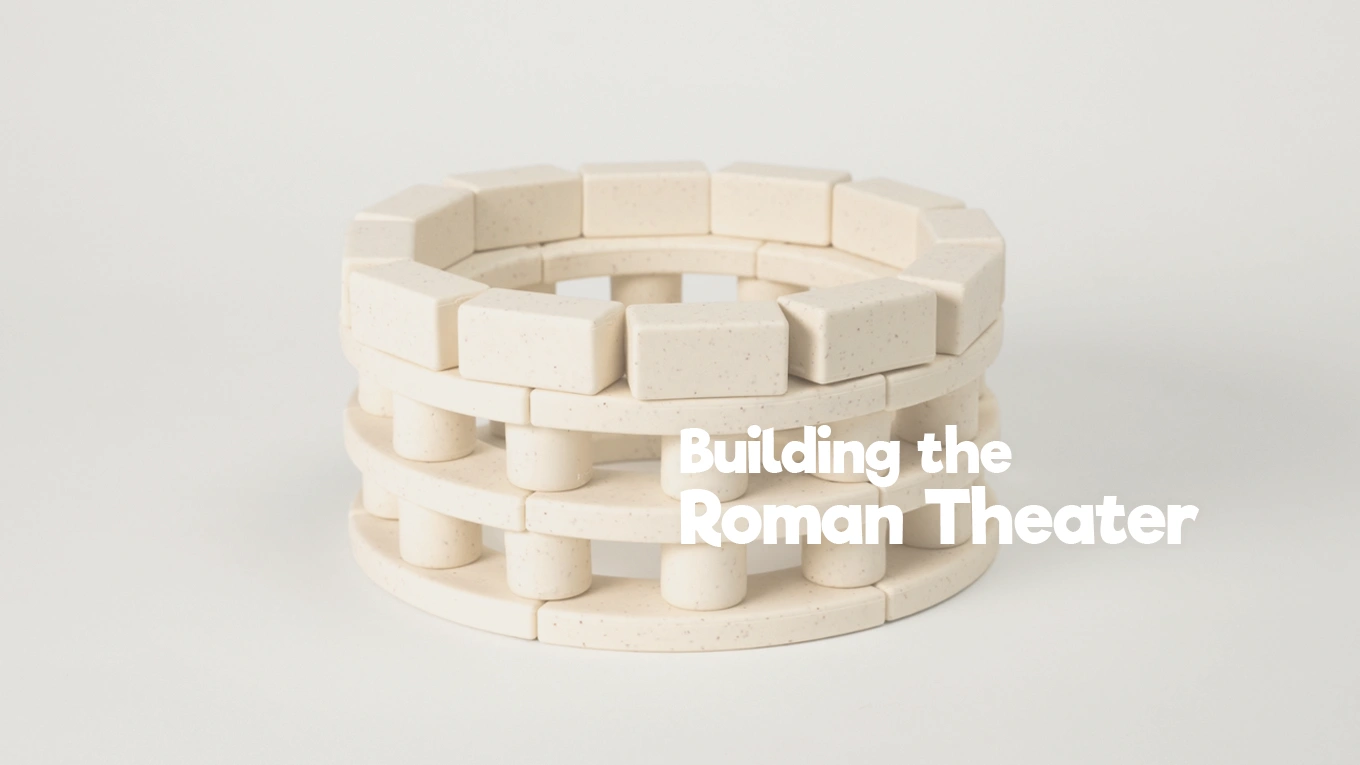
Repeated columns, arches, and supporting elements also show how many smaller structural units can work together to form architecture around a large interior space.
These principles reflect the ways people have worked with form, weight, and materials throughout history. Architectural forms are shaped not by appearance alone, but also by the loads they must carry, the materials available, and the spaces they are intended to create.
By reducing historical structures to pieces children can hold and assemble, Arch-Kid-Tech® helps them look beyond what architecture resembles and begin to understand why it was built that way.
Building in sequence is part of the learning
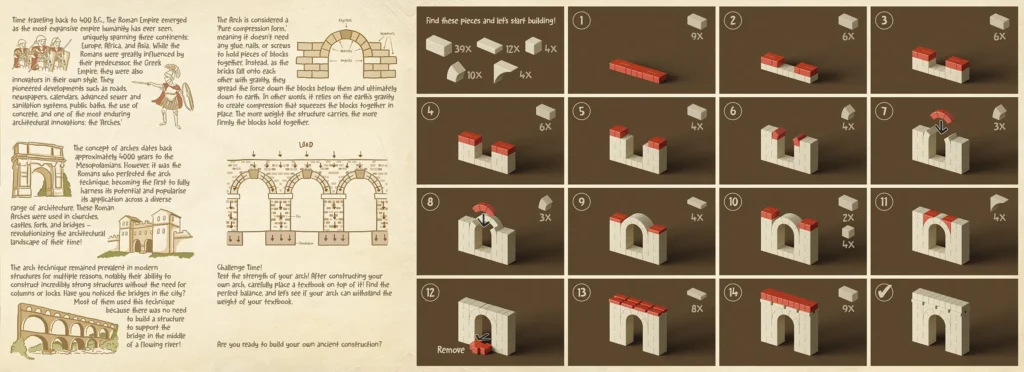
The guide included with Arch-Kid-Tech® does more than show what the completed structure should look like. It presents the construction in a sequence that reveals how the structure develops from the base upward.
Each step depends on what has already been built. The base must be established before it can support the next level. Columns must be positioned before the lintels above them can be placed. Pieces along a curve must be arranged in order before the structure can begin carrying the load as a whole.
Following the model is central to the experience, not a limitation to be quickly left behind. The prescribed sequence introduces structural principles in a form that children can see, touch, and gradually understand.
With repeated building, children may begin to remember more of the sequence, anticipate the role of the next piece, and recognize why certain steps cannot easily be rearranged.
What begins as following the guide can gradually become building with a clearer understanding of why each step matters.
Each individual set includes a step-by-step building guide and an illustrated leaflet introducing the broader historical context behind its architectural form.
Precision is part of the play
Arch-Kid-Tech® asks for more than selecting the correct piece. Each one must be placed carefully, with attention to alignment, spacing, and position before the next part is added.
Placements that look almost identical may produce different results once more of the structure has been built. Straight, evenly spaced columns allow the lintels above to rest fully on their supports. Ordered layers help transfer the load of the upper structure down toward the base.
Building therefore requires the eyes and hands to work together. The eyes read alignment, distance, symmetry, and continuity of form, while the hands control pressure, movement, and the position of each piece.
As the structure rises, builders must place, steady, and release each piece without disturbing what has already been completed, particularly when several parts begin carrying load together.
This deliberate pace calls for concentration, patience, controlled hand movements, and sustained attention. Success is not simply a matter of using every piece. It comes from placing each one so that it can perform its role within the structure as a whole.
When placement becomes information
When a structure does not yet match the guide or remain stable, the builder can compare what has been constructed with the illustrated steps and consider which part needs to be checked.
The answer may lie in the alignment of the base, the distance between supports, or the position of only a few pieces. Looking closely and making a considered adjustment helps children connect what they have done with the result they can see.
As experience grows, they may begin to check alignment before continuing, recognize the relationship between the lower and upper sections, and better anticipate where the next piece will need support.
Trying again becomes more than repetition. It becomes a process of observing, comparing, and adjusting with greater purpose.
From guided construction to informed variation
Arch-Kid-Tech® begins with guided construction. Following the model gives builders a foundation in the sequence, forms, and structural principles behind each architectural system.
Once the main structure becomes familiar, they may begin to explore modest variations, such as changing its height, adjusting the number of levels, or comparing alternative placements within the limits of the pieces included in that set.
More possibilities emerge when pieces from several sets are available. Different forms and structural principles can then be compared, combined, and tested together.
The Master’s Set brings together all 15 forms used across the six sets, along with more than one hundred shared pieces that can be used across different structures and the complete set of six building guides. With a broader range of elements and an understanding developed through the individual models, builders can begin combining principles, changing proportions, and developing structures of their own.
Variation does not come from abandoning the original models or the principles behind them. It grows from understanding how each form works and applying that knowledge to something new.
Thinking through building
Completing a structure brings several forms of thinking into one continuous process.
Children read and follow a sequence, compare forms, select the correct pieces, and check their orientation before placing them. As construction continues, they must consider how each new action relates to what has already been built and where the next piece will need support.
When the result differs from the model, they have an opportunity to pause, observe, and review the structure before continuing. Planning, spatial awareness, attention to detail, and problem solving are therefore practiced within something visible and physically present.
Precise placement also calls for hand-eye coordination, controlled movement, and sustained concentration, particularly as the structure becomes taller or more detailed.
Arch-Kid-Tech® brings structural principles to a scale at which children can encounter, observe, and gradually understand them through building.
To explore how experiences like these can support concentration, reasoning, and child development, continue to Why Play Matters for Child Development.
Tactile feedback for precise placement
Arch-Kid-Tech® is made from high-quality, food-grade TPE with a soft, solid feel and slight flexibility. The material creates friction between the pieces, supporting careful stacking, alignment, and fine positional adjustments.
As surfaces come into fuller contact, builders can perceive the change through both sight and touch. Pieces rest more closely together, the lines of the structure become more continuous, and a small adjustment produces a noticeably different result from an imprecise placement.
Touch is therefore part of the building process. It helps builders sense where pressure is being applied, how far a piece needs to move, and when separate parts are beginning to rest against one another more effectively.
When a structure falls, TPE produces a softer impact sound than rigid materials. The quieter impact is less likely to interrupt the rhythm of building, allowing the pieces to be gathered and the process to resume more naturally.
The material is durable enough for repeated use at home, at school, and in the classroom. Pieces can be cleaned in a dishwasher and sanitized with UV light according to the product care instructions.
Arch-Kid-Tech® has been tested according to applicable toy safety standards and requirements, including ASTM, EN71, and JFSL.
Suitable for children ages 7 and up.
How structures take shape
Each structure begins with pieces placed in sequence. As the parts are aligned and positioned to rest against one another, load moves from one section to the next until the structure can stand as a whole.
See how these principles take shape through stacking, alignment, and the way the pieces work together.
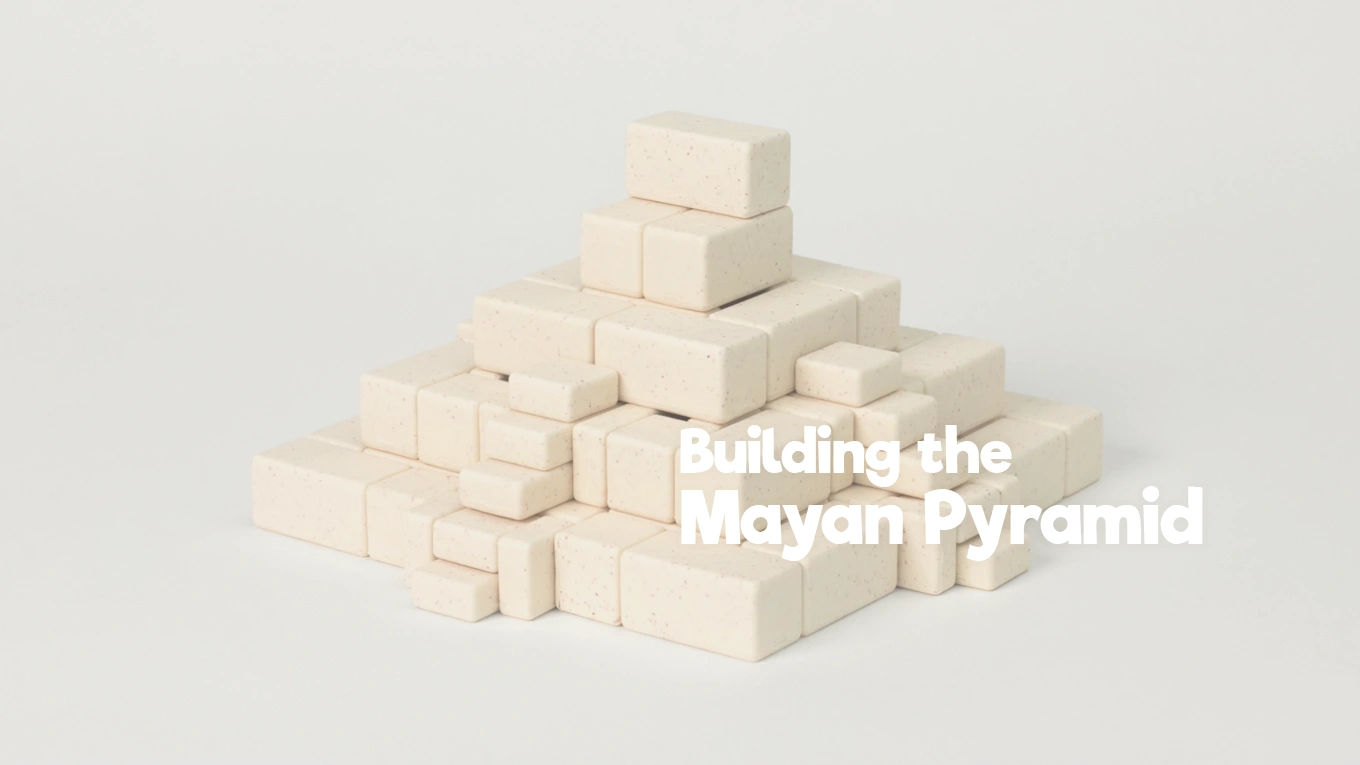

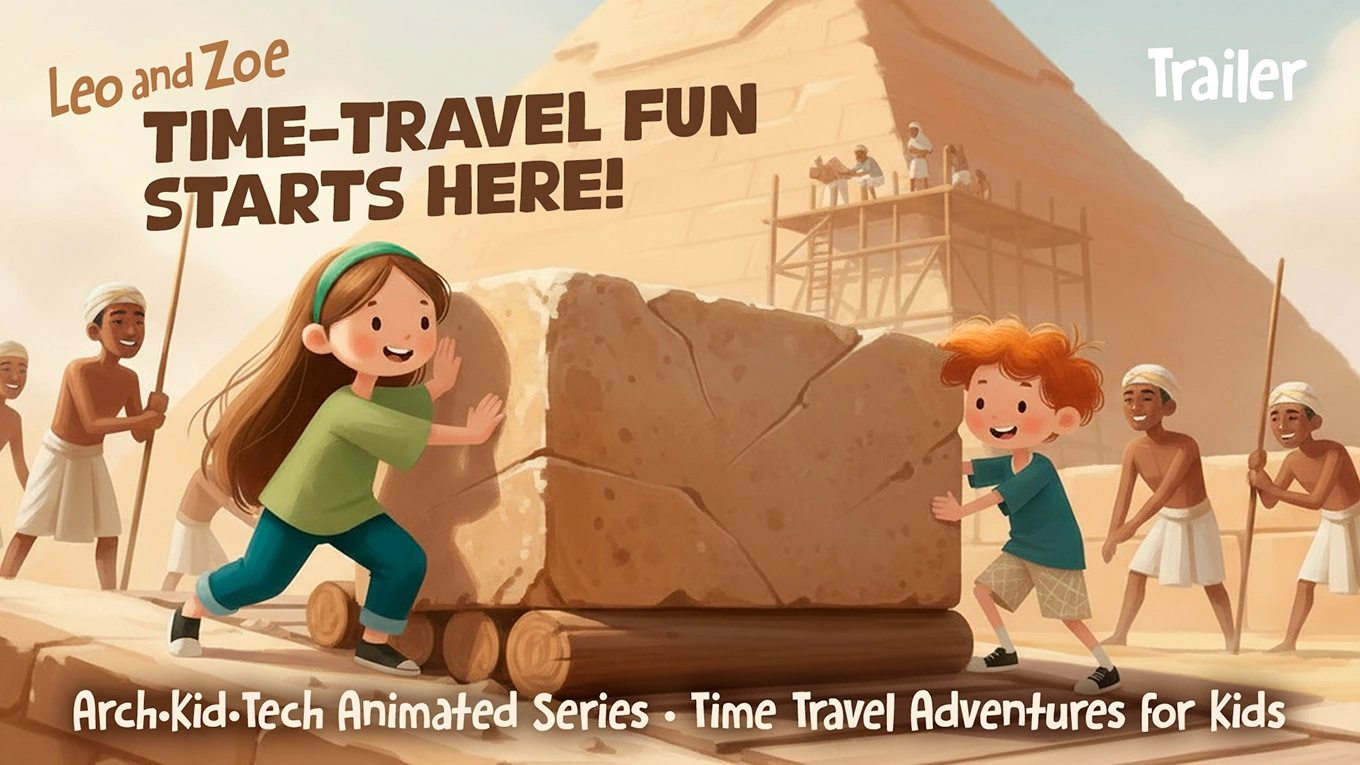
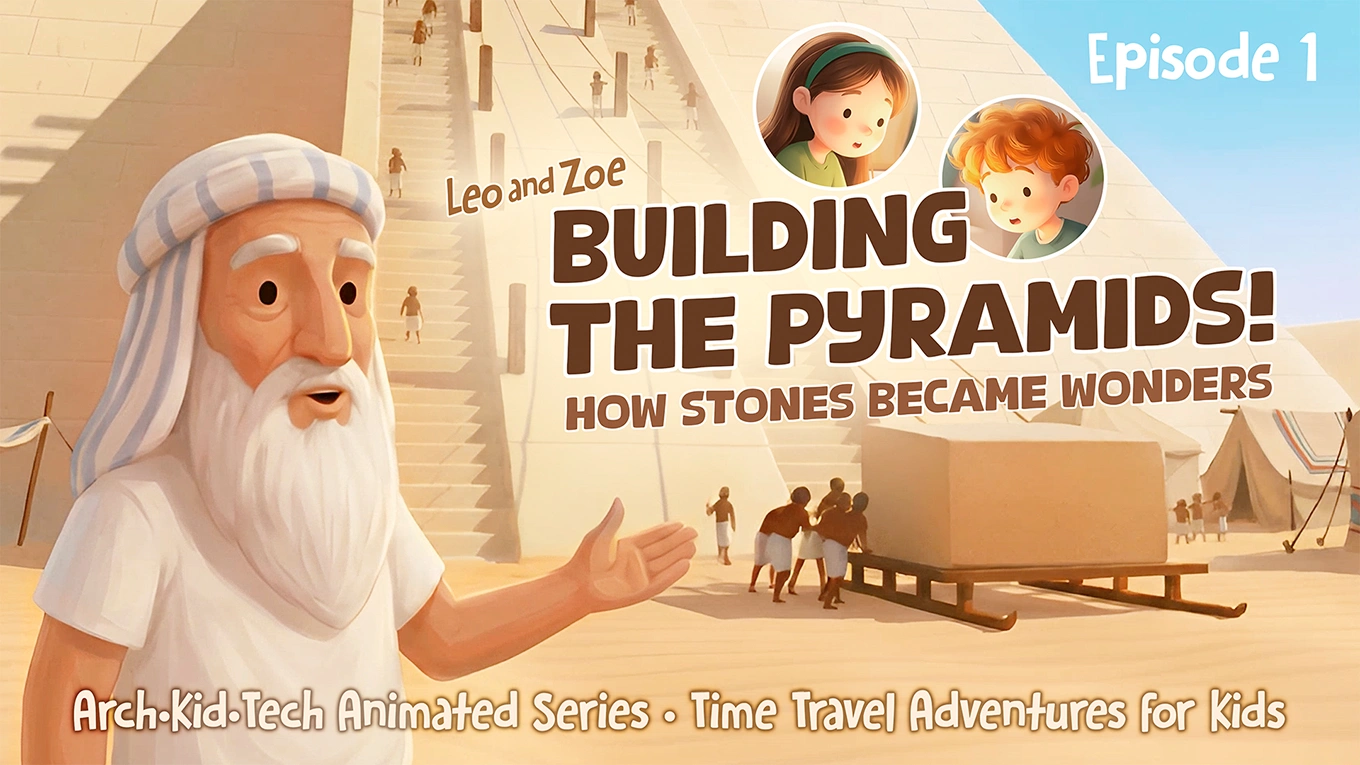
Stories Behind the Structures
Short animated stories that explore how structures are built through time, materials, and human effort.
Different systems, one shared belief
Each TaksaToys system expresses the same belief: children can learn through direct experience, with each system offering a different way to engage.
- Resources® invites children to explore balance, placement, and how each choice changes what happens next.
- Arch-Kid-Tech® makes structural principles, alignment, and force transfer visible through building.
- LOCOMO® invites children to observe, interpret, and create stories with elements found in nature.
- Resources® Playground brings movement, coordination, and collaboration into play.
Explore TaksaToys’ approach to Play-Based Learning, or read Why Play Matters in Child Development.
Arch-Kid-Tech®: Understanding structure through building
Build from principles. Refine with precision. See what makes a structure stand.ructure to hold.