Let the Child Change the Story: Using Familiar Characters Without Taking Over Play
A story can offer an easy starting point for play, but it can also accidentally become a set of instructions. When an adult asks a young child to recreate every part of a familiar story, there may be little room left for the child’s own ideas. What happens if the characters stay familiar but the plot is allowed to change?
I create original songs and stories for JBBJ Kids about Jaelyn, Baby Bear, and their dog Jersey. While developing these stories, I have been thinking about the difference between showing children an adventure and leaving them a way into one. A character a child recognizes can serve as a gentle invitation. The adult can offer a setting, make materials available, and let the child decide what happens next.
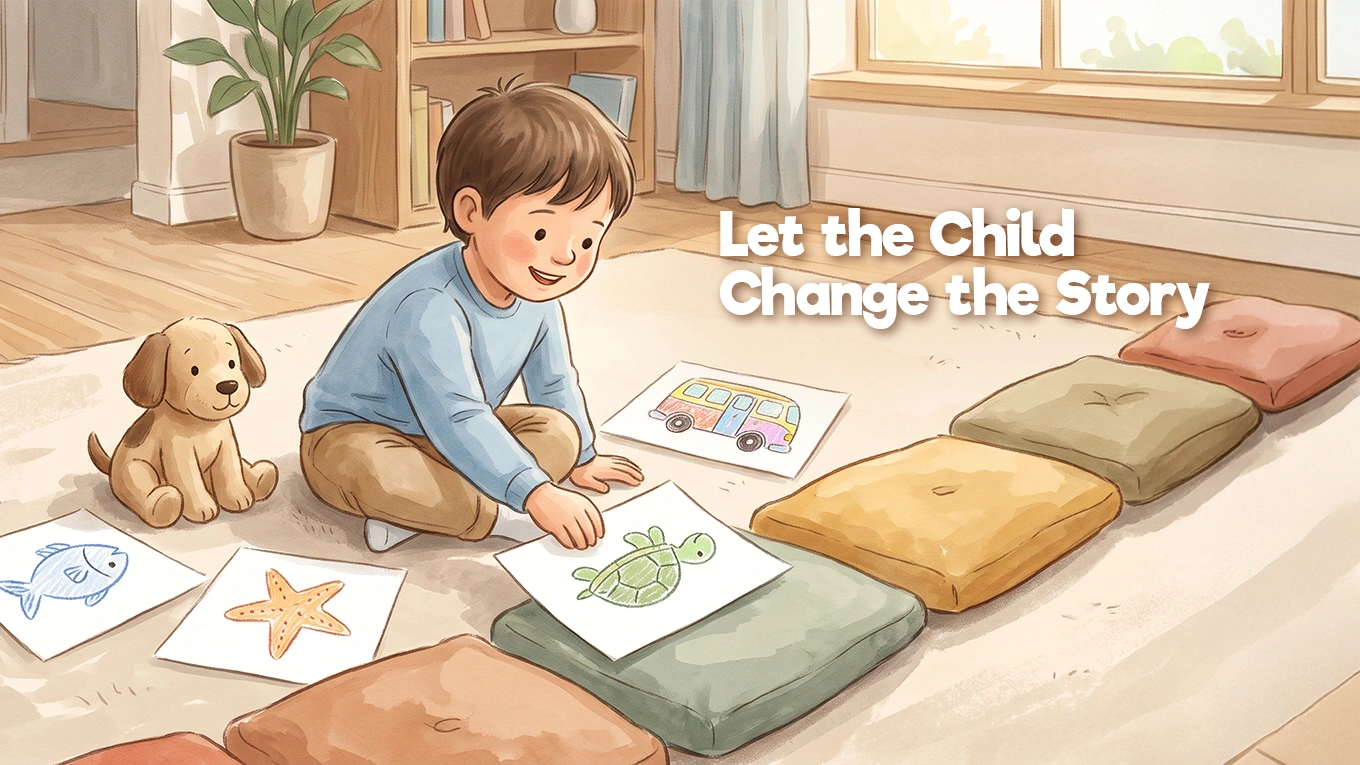
Imagine a pretend aquarium visit. Draw a fish, a turtle, and a starfish on three separate sheets of paper. Simple shapes will do. Place them where the child can see them and ask, “Jersey is visiting the aquarium. Which animal will he meet first?” The child might point, move a picture closer to Jersey, or tell you why they chose that animal.
Once the child has made a choice, try asking, “What might happen next?” Then give them time to look, point, or move a picture. If the answer is “The turtle drives a bus,” follow that idea. The child might draw a bus, make a road out of cushions, or simply tell you where the turtle is going.
A note from TaksaToys
When the turtle gets a bus, let the materials change with the story. A child might put a cushion beside the turtle and call it a bus stop, or move the turtle across the room. Give them a moment to show you what they have in mind.
This approach also leaves room for listening and turn-taking. An adult can say, “I have an idea, but you go first.” If more than one child wants to contribute, offer each a turn to choose a character, an action, or a place. One child might say where the bus is going. Another might move the turtle beside a cushion to show where it stops. Spoken sentences should not be the only accepted form of participation.
Some children enjoy showing what happened first, next, and last. If the child wants to do that, invite them to move the pictures or objects into an order that makes sense to them. They might change the order halfway through. Let the pieces move with the story.
Paper drawings and familiar soft toys are usually enough. With toddlers, skip tiny loose pieces. If the play moves onto the floor, leave a clear space to move around. A child can join from where they’re sitting or watch for a while. A few minutes may be all they want that day.
A song or animated story can give children a familiar character to start with. When it ends, see where they take the play. Jersey might go to the moon with the starfish. Children might invent a new animal or set the pictures aside and build something else. Any of those choices gives you something to notice about what interests them today.
About the contributor
Jason D’Silva creates original stories and songs for JBBJ Kids featuring the recurring characters Jaelyn, Baby Bear, and Jersey. You can watch his aquarium story on YouTube.