Texture Rubbing Activity: Hidden Forms Revealed
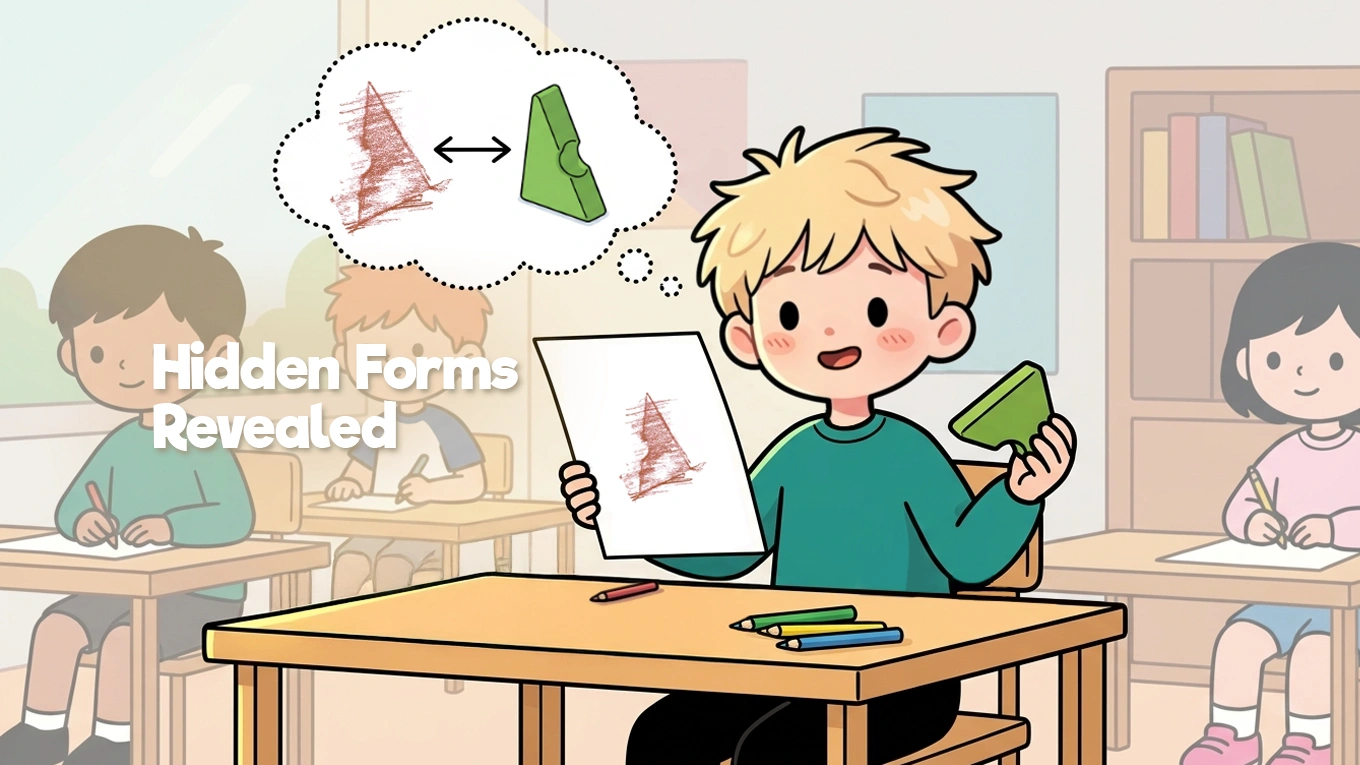
This texture rubbing activity uses Resources® as hidden “artifacts” beneath a sheet of paper. Children move a crayon across the surface and begin to see what cannot be seen directly. Edges appear, textures emerge, and each mark traces back to a physical form underneath. The setup is simple, but it invites careful observation. The child is not drawing from imagination alone, but responding to structure, pressure, and contact.
The Set-up
The “Artifacts”
A selection of Resources® pieces with varied edges and surface textures. The more variation, the clearer the contrast in the rubbings.
The Tools
Thin white copy paper works best, as it responds more sensitively to pressure. Use crayons without wrappers so the side of the crayon can make full contact with the paper.
Holding the Structure in Place
Small pieces of masking tape help keep each Resource® from shifting. This allows the child to focus on the mark, not on stabilizing the object.
Crayons
Offer only crayons that match the color of the assigned piece. A child with a blue piece works within shades of blue. This keeps attention anchored to the object in front of them, rather than drifting across too many choices.
How It Unfolds
Hidden Placement
Invite the child to place and tape 3–4 Resources® onto the table. Lay a sheet of paper over them. At this stage, the forms are present but not visible.
The Side Stroke
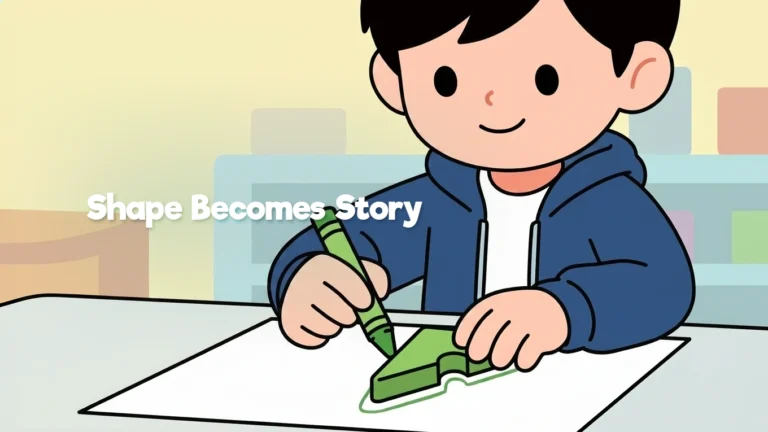
Rather than using the tip of the crayon, the child turns it sideways and moves it across the paper. The pressure needs to be adjusted. Too light, and nothing appears. Too strong, and the paper tears. The hand begins to calibrate itself.
The Reveal
As shapes begin to emerge, the child traces them back to their source. A curved edge, a flat side, a repeated pattern. The connection between touch and sight becomes clearer.
Layering
Different colors can be used across multiple forms. When shapes overlap, the child begins to notice how marks interact on a flat surface.
Continuing the Exploration
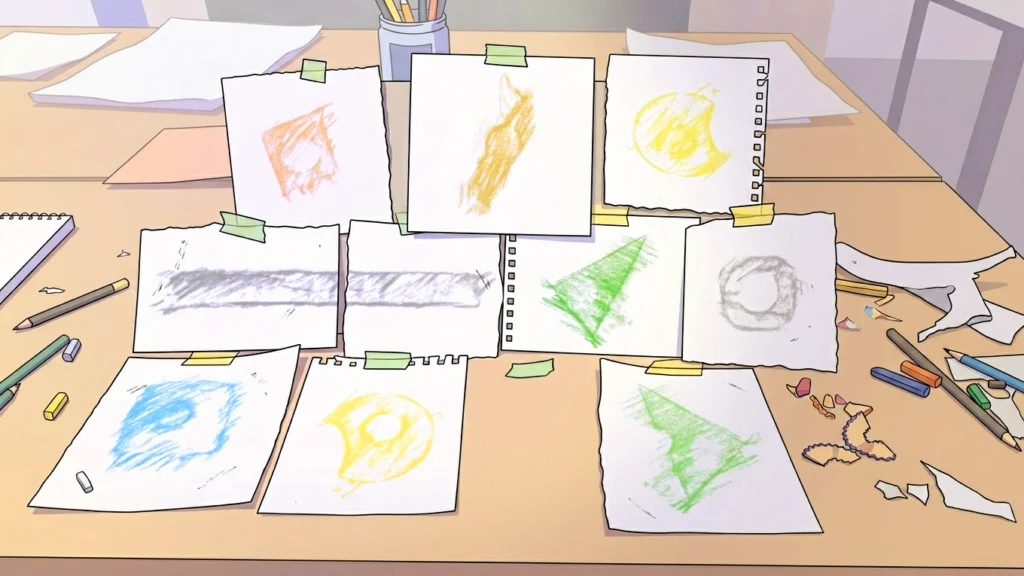
Once the page is filled, it becomes material for further exploration rather than a finished result.
Texture Sorting
The child selects and cuts out chosen rubbings. These are then grouped by surface quality. Smooth, even marks on one side. Irregular or textured marks on the other. The act of sorting brings attention to differences.
The Map That Emerges
The page can become a landscape. Shapes turn into places. A rough circle might hold heat. A smooth square might feel still. Lines connect them. The child moves through the page with intention.
Form Becomes Character
Rubbings can be reinterpreted. A circle becomes a body. A triangle becomes a tail. Additional elements are added, not randomly, but in response to what is already there. The child builds meaning from existing structure.
What This Supports
From Touch to Sight
A surface is felt first, then seen. The hand moves, and the eye begins to understand what texture looks like. This builds a connection between physical contact and visual pattern.
Calibrated Pressure
The result depends on how the child presses and moves. Control is not instructed, but discovered through consequence.
Understanding Impressions
Each rubbing is a record of contact. This introduces the idea that a form can leave a trace. It opens a path toward understanding prints, fossils, and other forms of transfer.
Relationships on a Surface
When multiple shapes are revealed and begin to overlap, the child starts to notice how forms sit together in space. Not as isolated drawings, but as interacting elements.
Every classroom and every child brings something different.
Share your adaptation or insight through Contribute a Reflection, and let the practice continue to grow.