Shape Drawing Activity: Little Artist
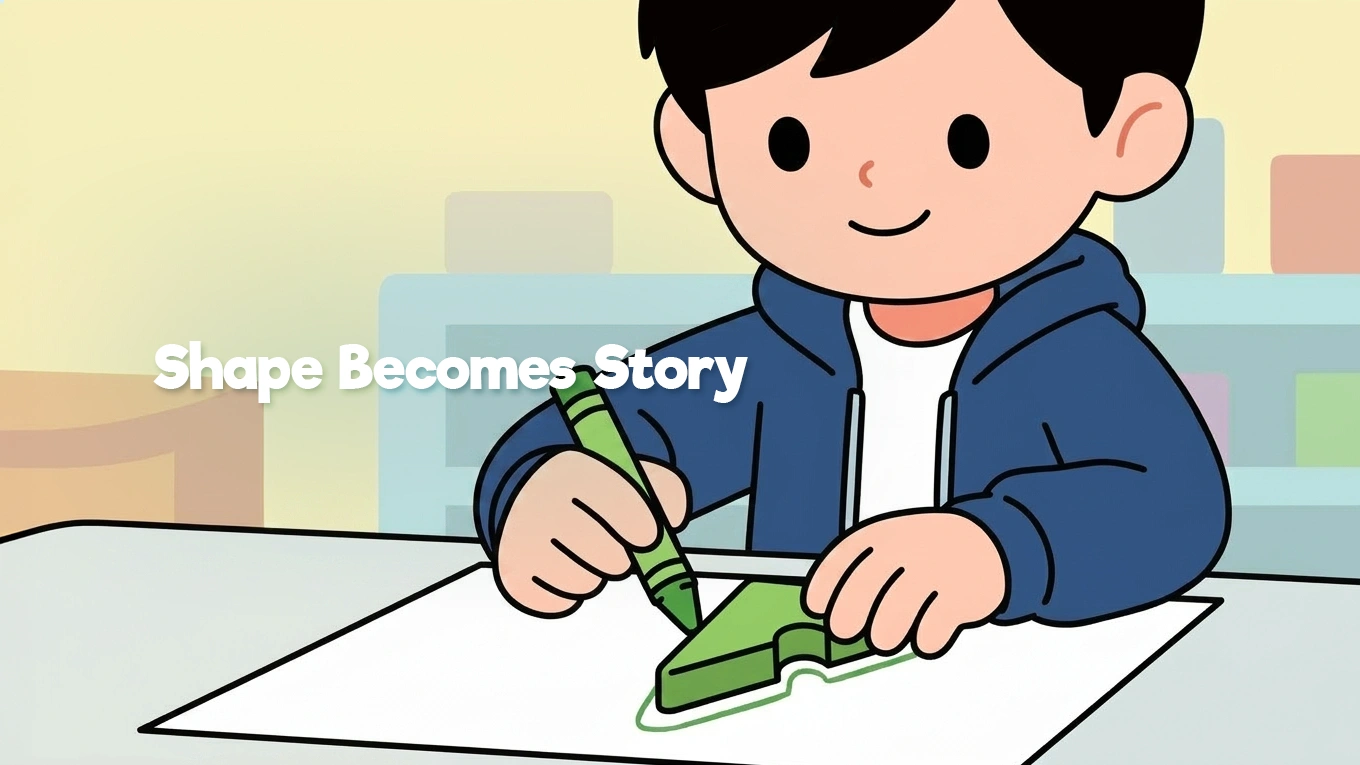
This shape drawing activity uses Resources® as a quiet starting point for children to observe, trace, and transform a single building piece into their own image. By working with one shape and one color family, children can slow down, notice edges and corners, and turn what they see into something new.
Invite the children to become “Resources artists.” Each child studies one assigned piece and creates their own interpretation from it.
The Set-up
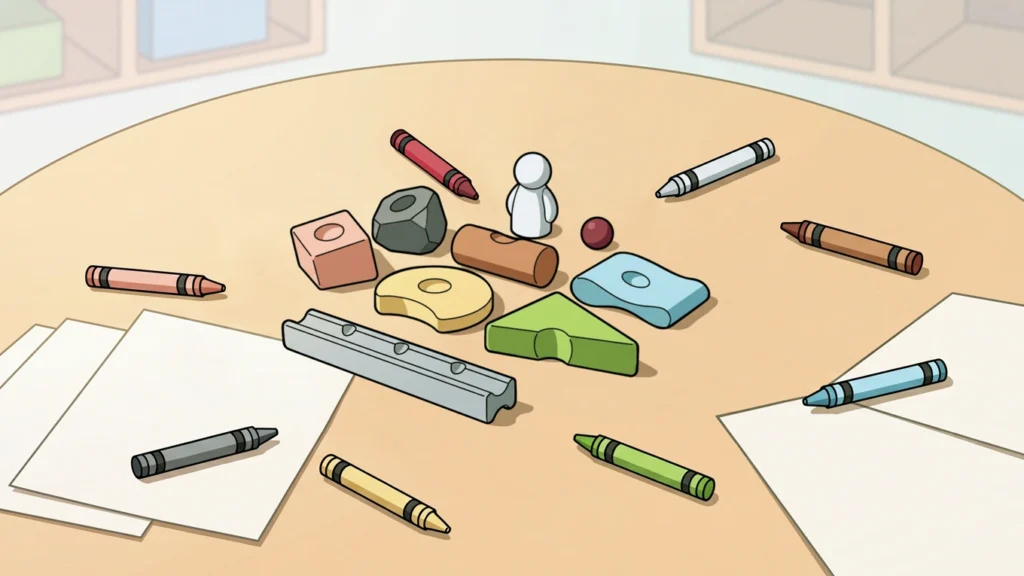
Give each child one Resources® piece and a clean sheet of paper.
Crayons
Provide only crayons that match the color of their specific piece.
For example, if a child has a blue piece, offer only blue-toned crayons.
This keeps the focus on the piece in front of them, rather than on choosing from many colors.
How It Unfolds
Understanding
Before drawing, invite the child to trace the shape with their finger.
Ask what shape they notice, where the corners are, and whether they can feel any flat sides or points.
Some pieces may have different sides or unexpected angles. Give children time to notice these details before moving to paper.
There is no need to rush toward naming the shape correctly. The value often comes from the act of noticing itself — tracing an edge slowly, turning the piece around, or realizing that one side feels different from another.
Drawing
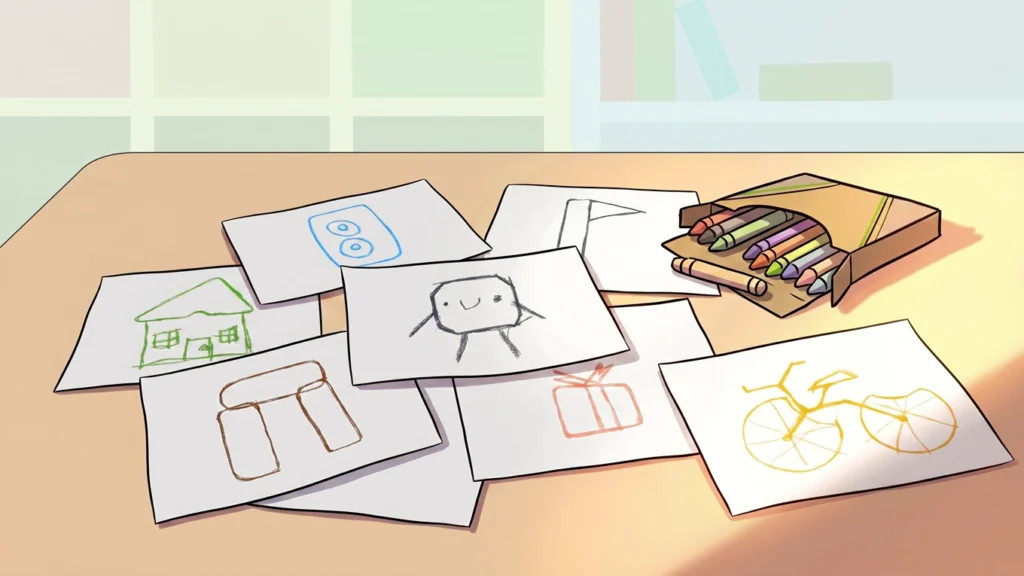
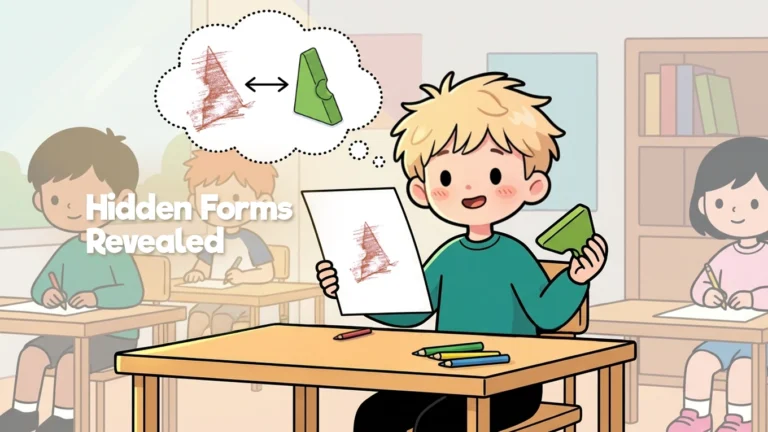
Have the children trace the outline of their piece onto the paper.
They can trace one side, several sides, or repeat the shape as many times as they like.
Then invite them to turn those traces into something else.
A red circle might become the sun. A green triangle might become a roof. A curved side might become part of an animal, a hill, or something only they can explain.
Wrap-up
Place the drawings together and take a slow look around the table.
Notice how the same shape can become many different things in different hands.
Some children may stay close to the original shape, while others may transform it completely. Both approaches are valuable, because the activity is less about producing a “correct” drawing and more about observing how children interpret what they see.
Mini Sharing
If time allows, invite a few children to share their work.
Use gentle questions such as:
“What did this shape become?”
“Which part came from the Resources® piece?”
“How did you decide to turn it into this?”
What This Supports
Fine Motor & Early Writing
Tracing shapes gives children practice with lines, angles, curves, and stopping points. These are the same small movements they will later use in writing letters.
Observation & Imagination
Children often draw from memory. This activity begins with looking closely at what is actually in front of them, then using imagination to transform it.
From Touch to Image
When children feel the edge of a piece before drawing it, they understand the shape through their hands first. Moving from touch to paper helps them connect physical experience with visual expression.
Focus & Visual Attention
Working with only one piece and a limited range of colors helps reduce visual noise. Children are able to stay with one shape a little longer, noticing small details that might otherwise be missed.
Confidence Through Interpretation
Because there is no single expected outcome, children can make decisions freely. A shape can become something recognizable, abstract, or entirely imagined. This creates space for children to trust their own interpretation. It also gives adults a quiet window into how each child sees, chooses, and makes meaning.
Every classroom and every child brings something different.
Share your adaptation or insight through Contribute a Reflection, and let the practice continue to grow.