Sorting and Classification Activity: Whose House is This?
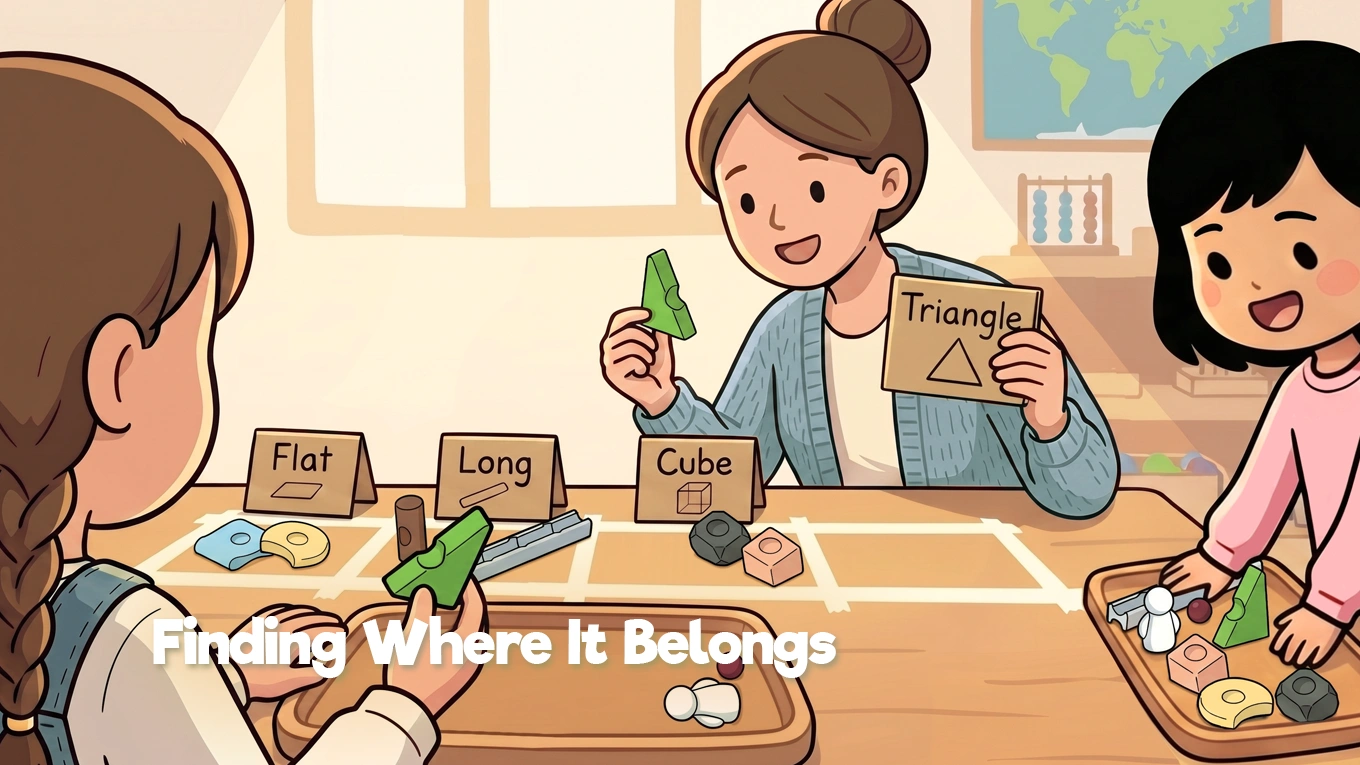
This sorting and classification activity uses Resources® as an open-ended construction toy to create a small “neighborhood” where each house holds a different rule. Children observe the pieces in their hands, compare shapes, colors, or attributes, and decide where each one belongs. As they move pieces between houses, they begin to notice patterns, exceptions, and relationships that are not immediately obvious.
The Set-up
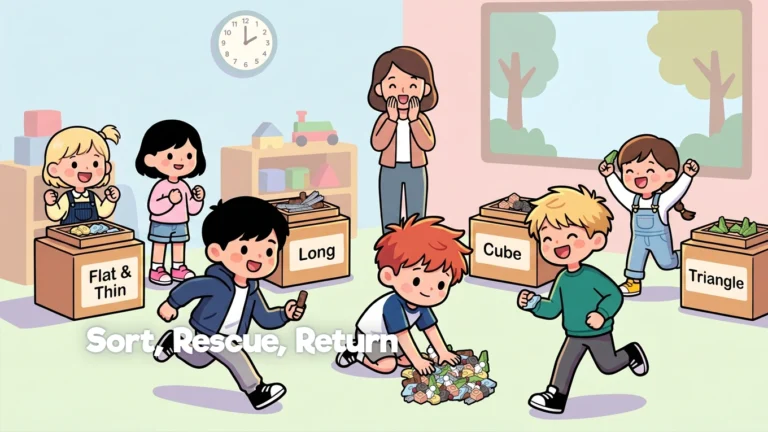
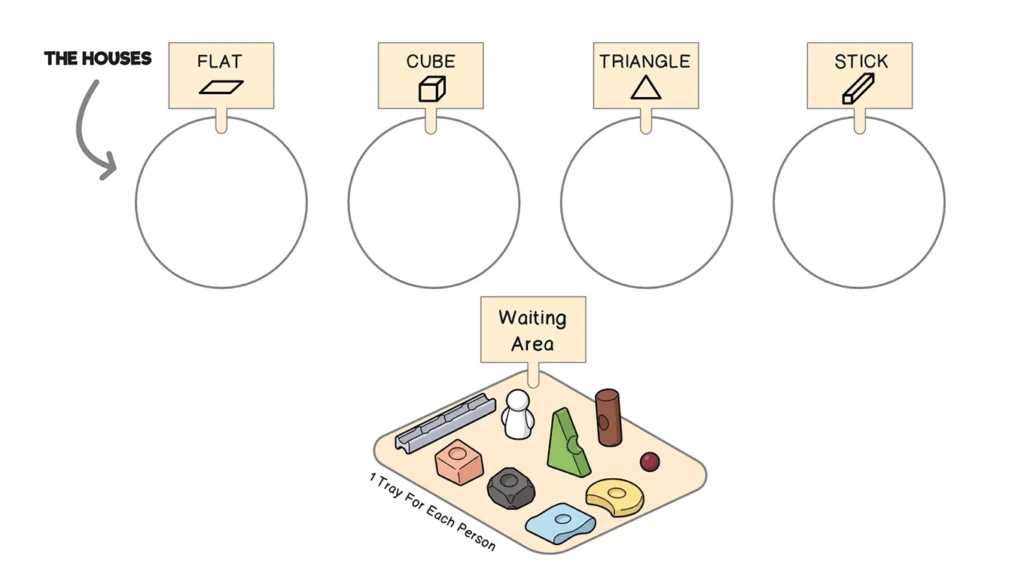
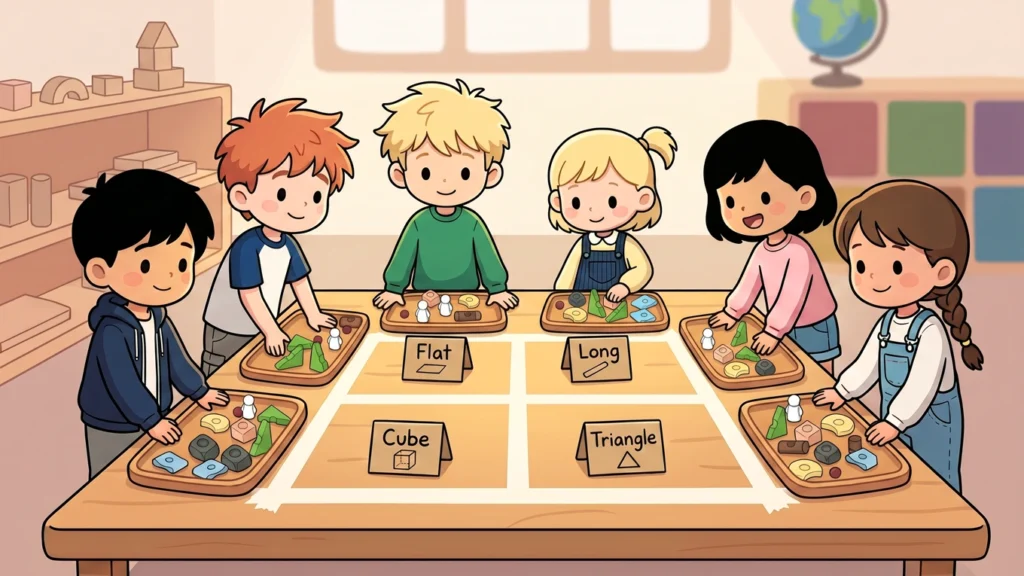
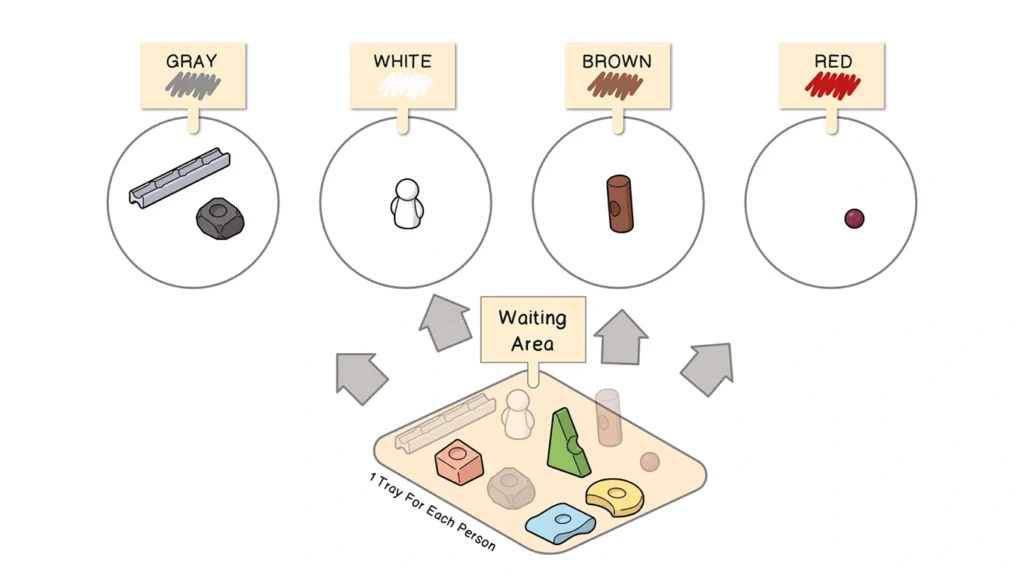
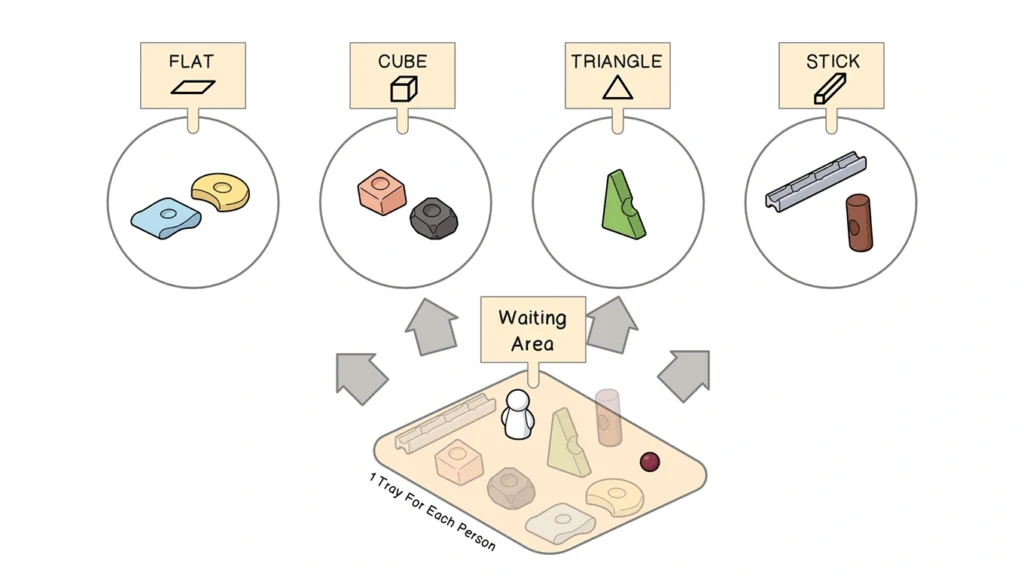
The classroom floor or table becomes a simple neighborhood. Three or four “houses” are enough to begin. Each house can be marked using colored hoops, taped squares, or sheets of paper.
Inside each house, place a signpost. This can be a printed symbol, a drawing, or a single piece of Resources® that represents the rule of that house.
For example, one house might hold a flat piece as its signpost. This suggests that only flat shapes belong there. Another house might display a cube, indicating that any piece with a cubic form can enter, regardless of color.
The rule does not always need to be literal. It can be hinted through an object, a visual clue, or a simple riddle, as long as the relationship is observable and within reach for the child.
Each child begins with a small set of mixed Resources® pieces, usually four to six.
How It Unfolds
A walk through the neighborhood
Begin by moving through each house together. Pause at each one and invite children to observe the signpost. What does this house seem to accept? What do they notice about the piece or symbol inside?
This moment is not about giving answers. It is about allowing the rule to become visible through attention.
Moving in
Once the houses are understood, children begin placing their pieces. Each decision is a small act of reasoning. A piece is turned, compared, reconsidered, then placed.
Looking again
After all pieces have been placed, return to each house as a group. Look closely. Does everything belong? Is there a piece that feels out of place?
Instead of correcting directly, the group reflects together. A child may explain why a piece fits, or why it should be moved. The rule becomes clearer through shared observation.
Variations That Shift the System
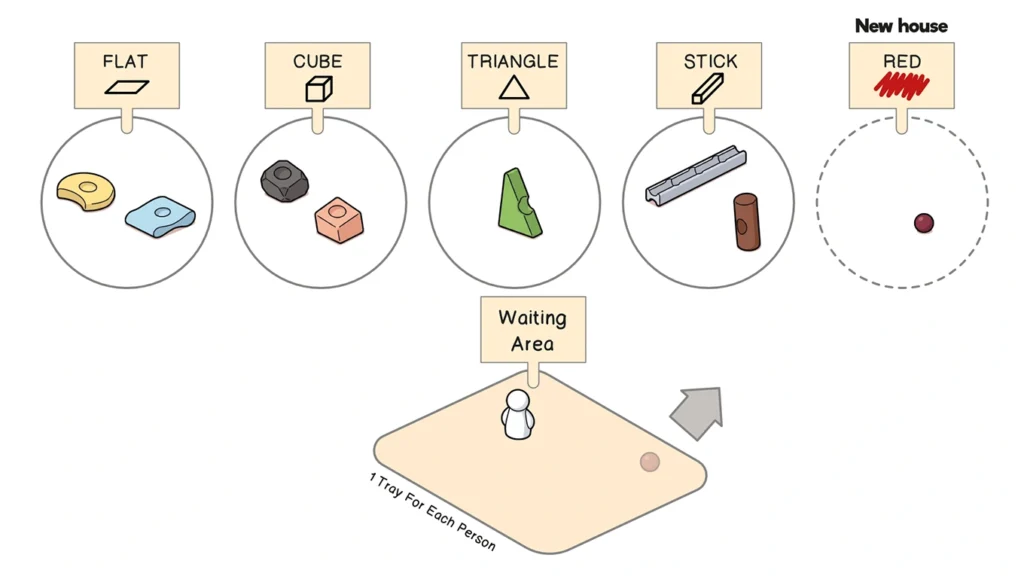
A new house appears
Introduce a new house while the activity is in progress, or quietly change the rule of an existing one. Children must revisit their earlier decisions and adjust. What was correct before may no longer hold.
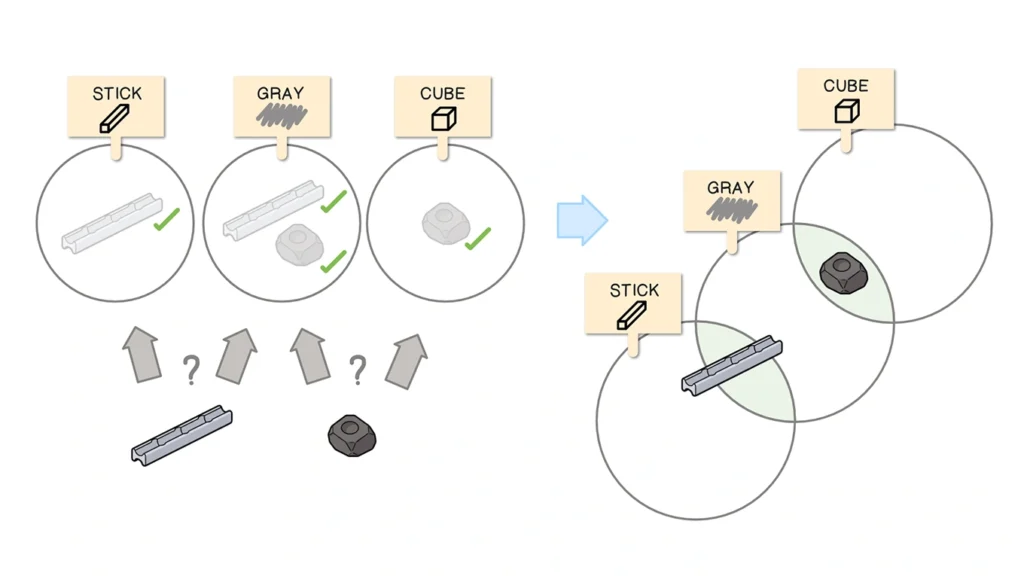
Shared residents
Create two houses with overlapping conditions, such as a red house and a circular house. A red sphere now belongs to both. This opens a question rather than a fixed answer. Children may decide it can live in both places, or you may physically overlap the houses to form a shared space.
A limited window
Introduce a gentle time boundary. The neighborhood is only open for a short period. The pace shifts, but the thinking remains. Children begin to balance speed with accuracy.
The hidden rule
Create a house without a visible signpost. The rule exists, but it is not shown. As children test pieces, you respond only with “welcome” or “not this house.” Over time, patterns begin to emerge, and the rule becomes something they infer rather than receive.
What This Supports
Seeing structure through grouping
When children place pieces into houses, they are working with the idea of sets. A group is not random. It holds together through a shared rule. This is a quiet introduction to how categories, systems, and later mathematical thinking are formed.
Holding more than one attribute
Young children often focus on a single visible feature. A piece is red, or a piece is round. When a piece belongs to more than one house, they begin to notice that objects can carry multiple identities at once. This shift builds flexibility in how they see and interpret the world.
Reasoning through uncertainty
Not every piece fits neatly. Some require a pause. A child may turn it in their hand, compare it again, or test a decision. This is not about following instruction, but about working through a small, visible problem.
Learning through each other
During the review phase, children begin to explain their thinking. One child may question another. Another may offer a different perspective. The correction does not come from above, but from within the group. The rule becomes something they hold together.
Every classroom and every child brings something different.
Share your adaptation or insight through Contribute a Reflection, and let the practice continue to grow.