How Children Learn to Use Bilateral Coordination
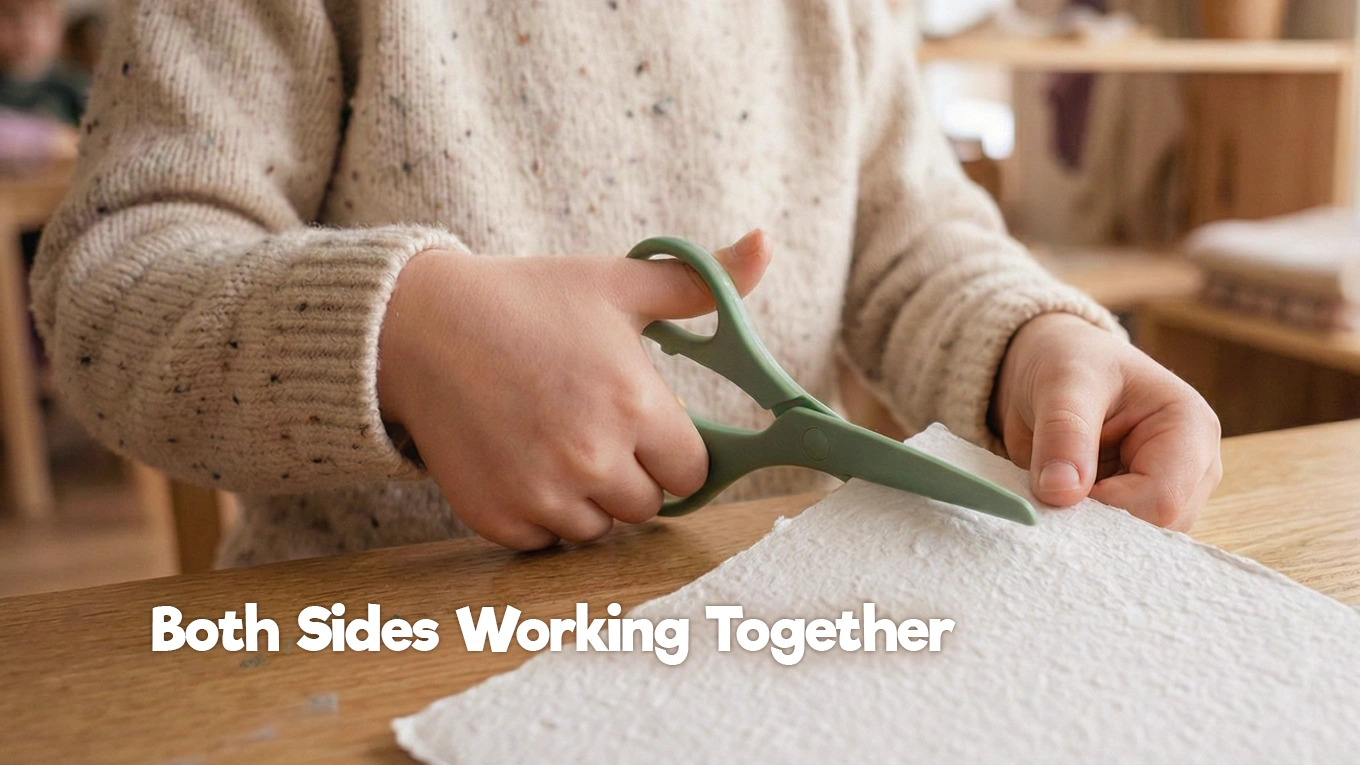
Bilateral coordination is one of the quiet foundations of child development. It appears in ordinary moments, such as tying shoes, catching a ball, holding paper while writing, or using both hands to open a lunchbox. These actions may look simple from the outside, but they depend on the brain and body learning how to work together with timing, balance, and intention.
Why Using Both Sides of the Body Matters
Watch a child butter toast, climb a ladder, or steady a page while drawing. One hand may hold, while the other moves. One foot steps, while the other prepares to follow. This is bilateral coordination at work.
Bilateral coordination means using both sides of the body together in an organized way. It supports many daily tasks, including dressing, writing, cutting, climbing, eating, and riding a bike. When this coordination flows smoothly, children can focus more fully on what they are doing. When it is still developing, simple routines may require more effort than expected.
A child may avoid using scissors, switch hands often while drawing, or become frustrated with tasks that ask both sides of the body to do different jobs. These moments do not need to be seen as failure. They are signs that the body is still practicing how to organize movement, pressure, timing, and attention.
The good news is that bilateral coordination grows through repeated experience. It does not need to be rushed. It strengthens through movement, play, and everyday actions that invite the body to organize itself again and again.
The Brain Behind the Movement
The Corpus Callosum: An Internal Bridge
Inside the brain, the corpus callosum helps the left and right hemispheres communicate. This communication matters when a child uses both sides of the body together, because each side must receive information, adjust timing, and respond to what the other side is doing.
This is why bilateral coordination is more than a physical skill. It reflects how movement, attention, sensory feedback, and planning come together. A child who steadies paper with one hand while writing with the other is not only using two hands. They are organizing position, pressure, direction, and purpose.
Three Patterns of Coordination
Bilateral coordination often appears in three broad patterns.
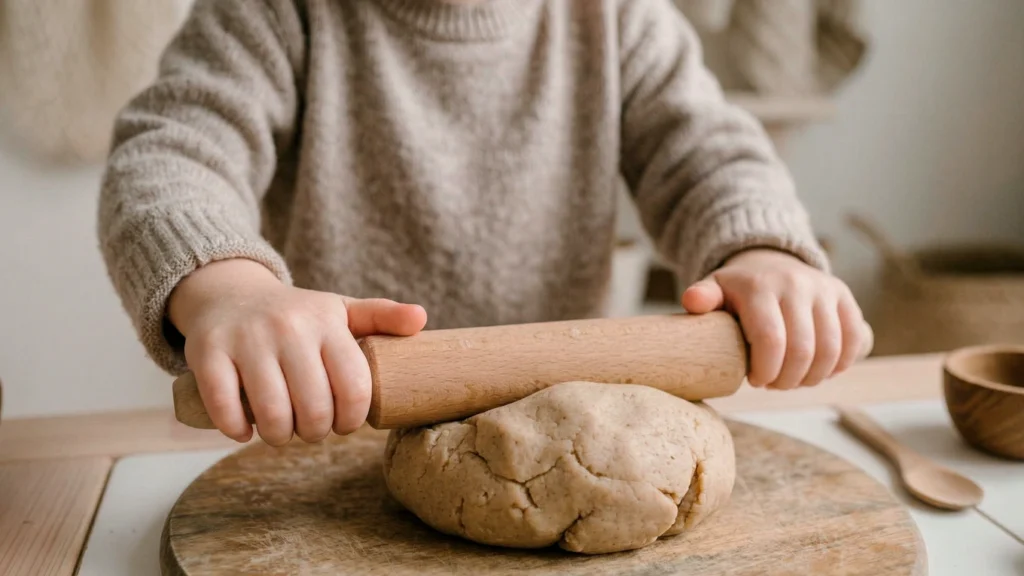
Symmetrical movements happen when both sides do the same action at the same time. Clapping, pushing a large ball, rolling dough with both hands, or jumping with two feet together are familiar examples. These movements often appear earlier and help children experience both sides of the body working as one.
Alternating movements use a back-and-forth rhythm. Crawling, walking, climbing, marching, swimming, and pedaling all depend on this pattern. Each side takes a turn, while the whole body stays organized.
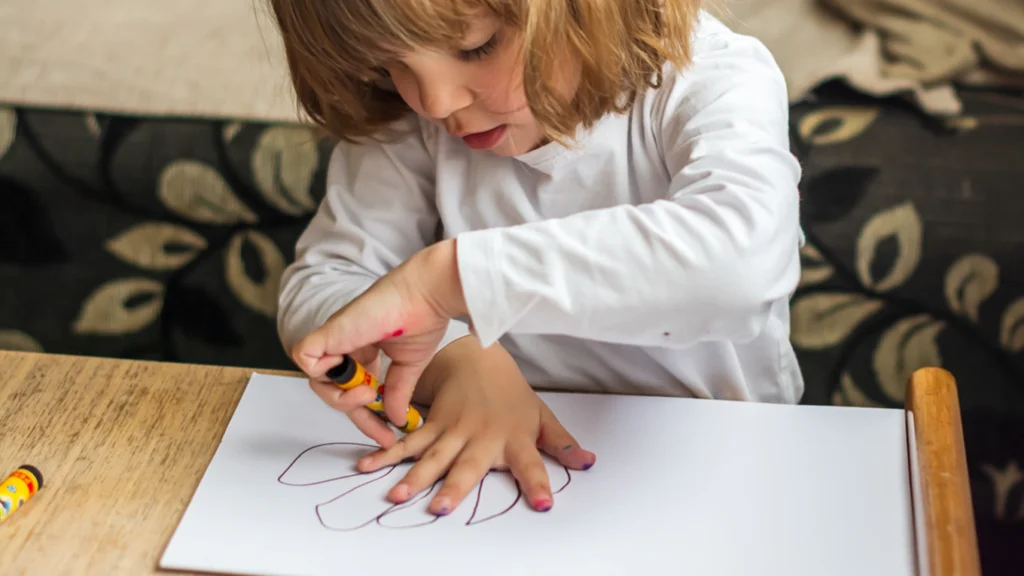
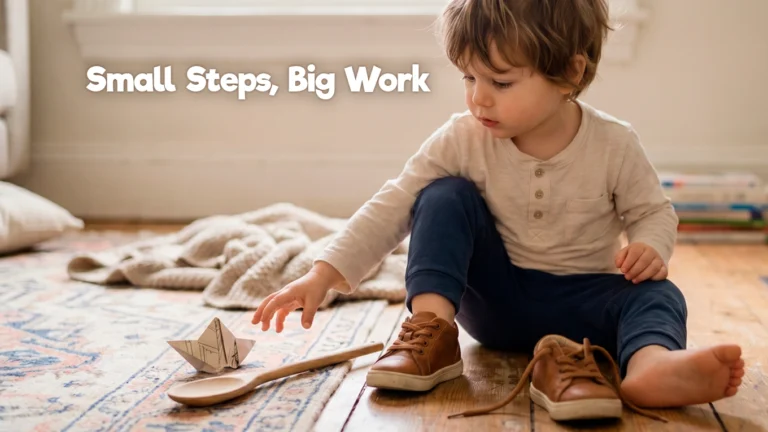
Asymmetrical movements are more complex. One side holds or stabilizes while the other side performs a more detailed action. Cutting paper, threading beads, opening a jar, zipping a jacket, or using a fork and knife all require this kind of coordination. The two sides are not doing the same thing, but they are still working together.
Crossing the Midline
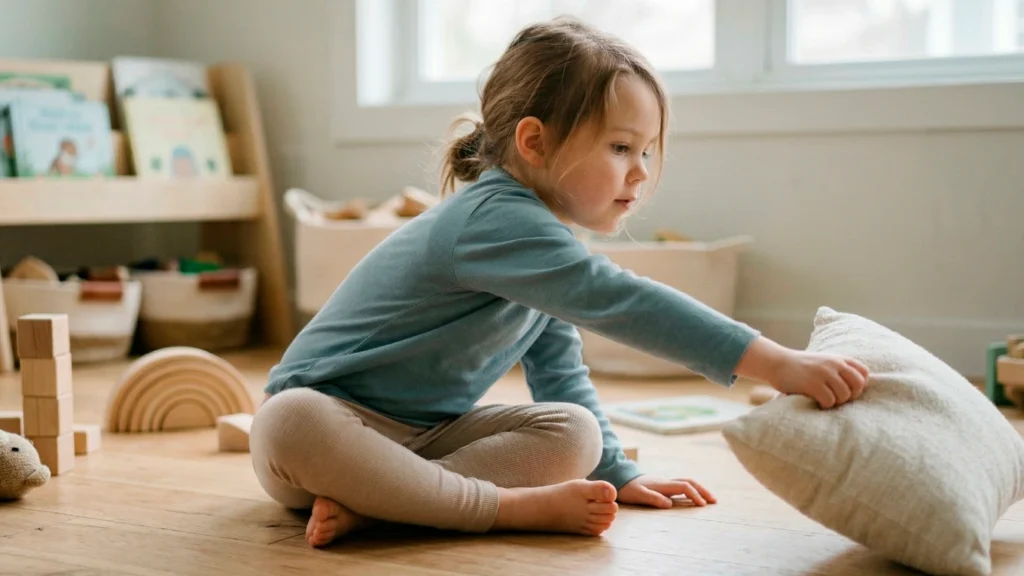
Crossing the midline means reaching across the invisible line that runs down the center of the body. A child crosses the midline when the right hand reaches to the left side, or the left hand reaches to the right side, without switching hands.
This skill supports smooth movement across space. It also matters for activities like drawing across a page, tracking words while reading, and using tools with a clear dominant hand. Some children avoid crossing the midline by changing hands instead. This does not always signal a problem, but it can show that the body is still practicing how to organize movement across both sides.
Sensory Feedback Completes the Picture
Bilateral coordination depends on more than muscle control. The brain is constantly receiving information from the senses. Vision helps children see where their hands are. Touch tells them what they are holding. Proprioception, the sense of where the body is in space, helps them adjust without needing to look at every movement.
Through varied movement, children build a more reliable feedback loop. They begin to notice how much force to use, where to place a hand, when to shift weight, and how to recover when something does not go as planned.
Everyday Activities That Build Bilateral Skills
You do not need a formal exercise routine to support bilateral coordination. Many helpful experiences already live inside ordinary play and daily care.
For symmetrical coordination, children can roll dough or clay with both hands, catch large balls, push a toy cart, pour water, scoop sand, or press two objects together.
For alternating coordination, crawling games, animal walks, climbing, marching to music, swimming motions, tricycle riding, and playground movement all help the body practice rhythm and turn-taking between sides.
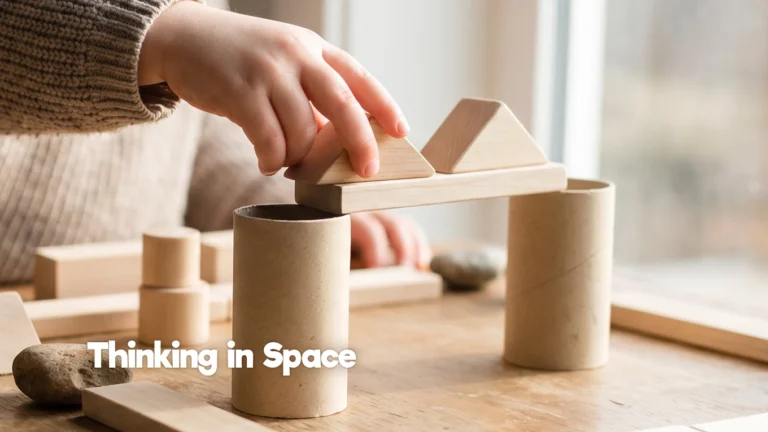
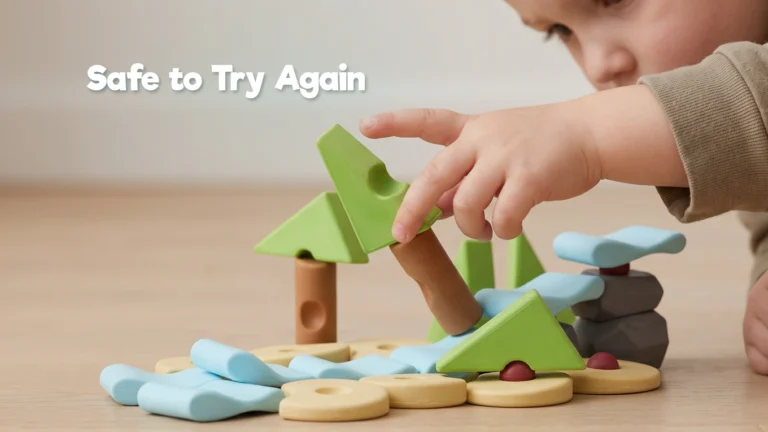
For asymmetrical coordination, offer tasks where one hand holds while the other works. Lacing cards, stringing beads, cutting with scissors, spreading with a butter knife, opening containers, using a hole punch, or building without interlocking parts that requires them to hold a piece stable while placing another piece.
For midline crossing, children can draw large figure-eights, wipe a table with wide sweeping motions, reach for objects placed slightly across the body, or play catch from different angles.
For whole-body integration, obstacle courses, yoga poses, bear walks, crab walks, and climbing activities help both sides of the body respond together through movement, balance, and adjustment.
Tools and Materials That Support Bilateral Development
When choosing materials, look less at what they claim and more at what they ask the child to do. Useful materials often invite both hands to take part, but not always in the same way.
Good options include interlocking construction pieces that require pushing, pulling, stabilizing, and connecting; rolling pins sized for small hands; modeling compounds that can be pulled, pinched, pressed, and stretched; threading materials with beads and laces of different sizes; and large drawing surfaces that allow broad arm movements across the body.
Outdoor climbing structures also offer rich practice. A child reaches, grips, shifts weight, and decides where the next hand or foot should go. The movement is physical, but the thinking is visible in every adjustment.
Moving Forward Together
Every child develops at their own pace. Some children organize these movements early, while others need more time, more repetition, or more varied experiences. What matters is not forcing performance, but offering steady opportunities to move, hold, reach, carry, climb, press, pull, and adjust.
If you have ongoing concerns about your child’s motor development, a pediatric occupational therapist can offer individual guidance. In daily life, the small moments still matter. The dough being rolled, the beads being threaded, the paper being held steady, and the careful reach across the table are all part of how the body learns to work as a whole.
*This article is for informational purposes only and does not constitute medical or therapeutic advice. If you have concerns about your child’s development, please consult a pediatrician or occupational therapist.*
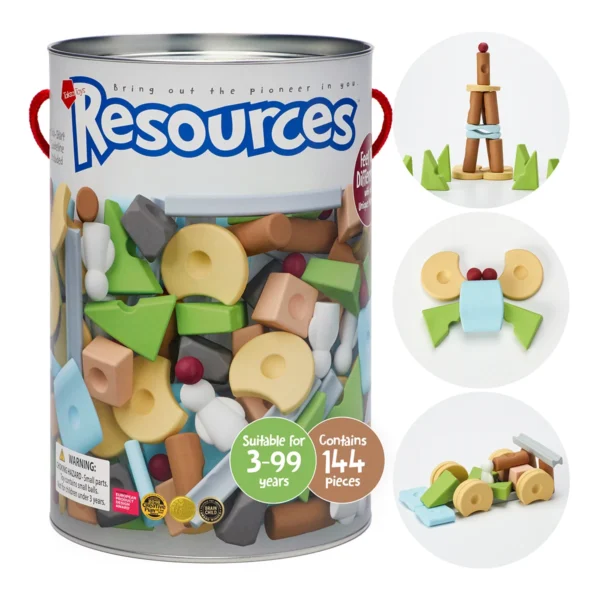 Resources® Expert Pack (144 pcs)