Understanding Executive Function and Self-Regulation in Children
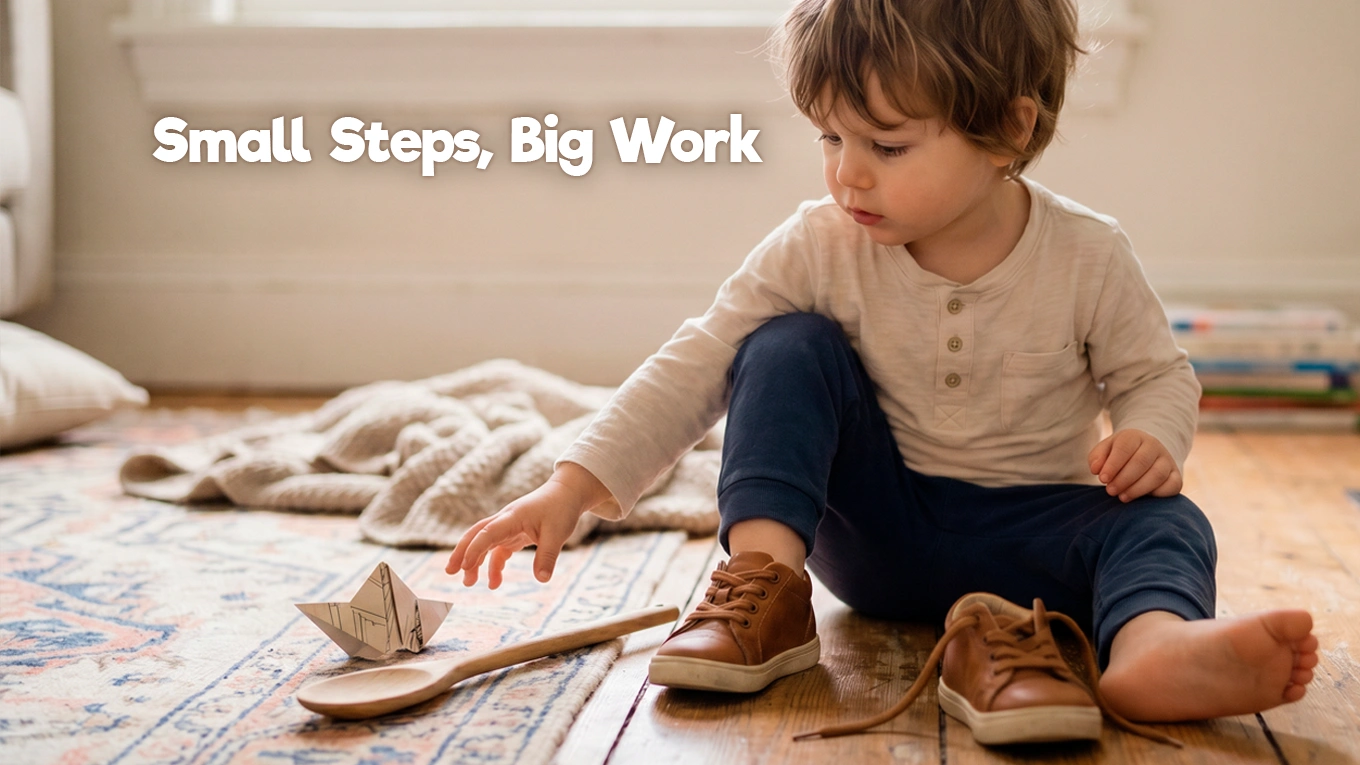
Executive function in children shapes many ordinary moments that adults often expect to go smoothly, from getting ready for bed to putting on shoes, waiting for a turn, shifting plans, or calming down after disappointment. These skills are not signs of obedience or willpower alone. They are part of a developing system that helps children hold information, pause before acting, manage emotions, and adjust to what is happening around them.
Picture this: you have explained the morning routine three times. Your child nods along, seeming to understand every word. Five minutes later, one shoe is on, the other is untouched, and their attention has moved to something on the floor. Familiar?
Before frustration takes over, it helps to know that this is not always defiance or carelessness. Your child’s brain is running a command center that is still under construction. Understanding how this system works can change the way we support children through everyday challenges.
The Air Traffic Control Tower
Deep in the front part of the brain sits the prefrontal cortex. Harvard’s Center on the Developing Child describes executive function and self-regulation as working like an “air traffic control system,” helping the brain manage information, focus attention, filter distractions, and shift between tasks.
This matters because many things we ask of children rely on this control tower. Following multi-step directions, waiting for a turn, handling disappointment, moving from playtime to dinner. These may look simple from the outside, but for a developing brain, they require coordination across thought, action, and emotion.
The Big Three Mechanics
Research often describes executive function through three closely connected skills: working memory, cognitive flexibility, and inhibitory control. Together, they help children manage what they know, what they feel, and what they do next.
Working Memory: The Mental Sticky Note
Working memory allows children to hold information in mind while using it. When you say, “Put on your shoes, grab your backpack, and meet me at the door,” your child has to keep all three steps active long enough to act on them.
For young children, this mental space is still limited. A preschooler may manage one or two pieces of information more easily than a longer sequence. When instructions become too full, the child may not be ignoring you. The sticky note may simply have run out of space.
Cognitive Flexibility: The Mental Gear Shift
Cognitive flexibility helps children adjust when something changes. The shoe feels wrong. The playground is closed. A sibling took the blue cup. The block tower falls before it is finished. This skill allows a child to shift from one expectation to another without becoming completely stuck.
Between early childhood and the school years, this ability becomes more stable, but it still needs practice. Children often learn flexibility through small changes they can survive with support, not through sudden demands to “just get over it.”
Inhibitory Control: The Mental Brakes
Inhibitory control helps children stop an automatic response and choose another action instead. Do not touch the cookie. Wait for your turn. Use words instead of hitting. Stay seated even when the body wants to move.
This is one of the most difficult parts of executive function because it asks the child to pause at the very moment they feel pulled to act. The brakes are not missing. They are still becoming strong enough to work under pressure.
The Construction Zone: A Long Timeline
One point often surprises adults: the prefrontal cortex develops over many years. This does not mean children are incapable of self-control. It means their ability to use it depends on age, context, emotion, fatigue, and support.
A toddler’s control tower has only a small crew. By elementary school, more systems are in place, but they can still go offline when a child is hungry, tired, rushed, or overwhelmed. Even older children may seem capable in calm moments and struggle when emotions rise.
This timeline is not a flaw. It is how development unfolds. Expecting a young child to regulate like an adult is like expecting them to carry a structure before the foundation has settled.
When Big Emotions Short-Circuit the System

Many parents notice that a child’s skills seem to disappear during a difficult moment. There is a biological reason for this. Under stress, the brain gives more attention to protection and survival. The thoughtful, planning part of the brain becomes harder to access.
This helps explain why a child who can usually follow instructions may fall apart over a broken cracker, a changed plan, or a shoe that suddenly feels wrong. In that moment, reasoning is not the first doorway back. Safety is.
Rebooting the Control Tower: Practical Strategies
When executive function goes offline, connection comes before correction.
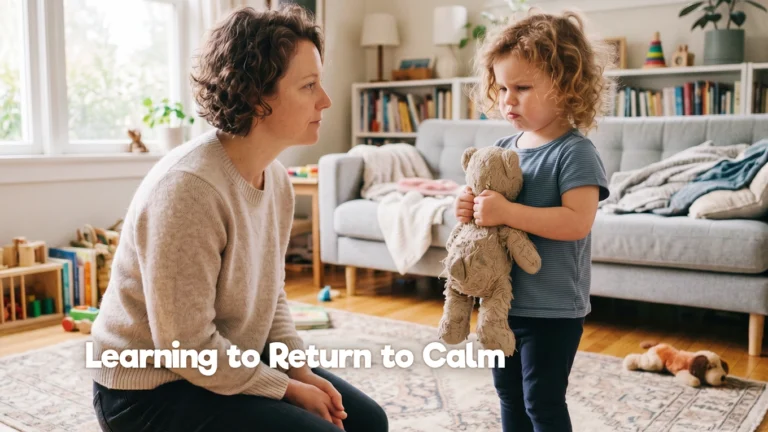
Help the body settle first. A slow breath, firm gentle pressure, quiet presence, or sitting together can help the child return to a calmer state. This is not giving in. It is helping the brain become available again.
Simplify instructions during stress. One step is often enough. Instead of explaining the whole plan, try, “First, let’s sit down.”
Create predictable routines. When a sequence becomes familiar, it asks less of working memory. A picture schedule, a repeated rhythm, or a consistent order can move some of the work from the child’s mind into the environment.
Name emotions without judgment. “You are frustrated that the tower fell” gives the child words for an internal state. Over time, this supports self-regulation because the child begins to notice what is happening inside before acting on it outside.
Tools That Exercise the Mental Muscles
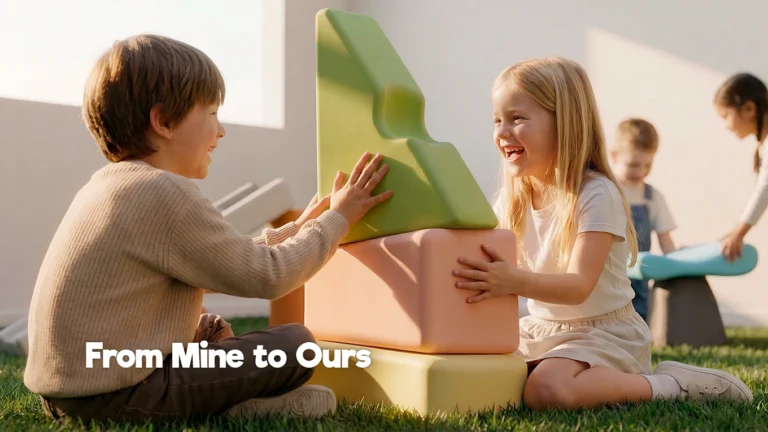
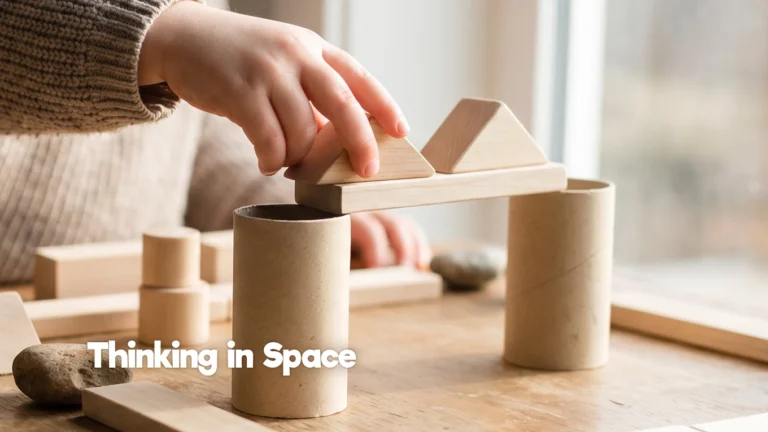
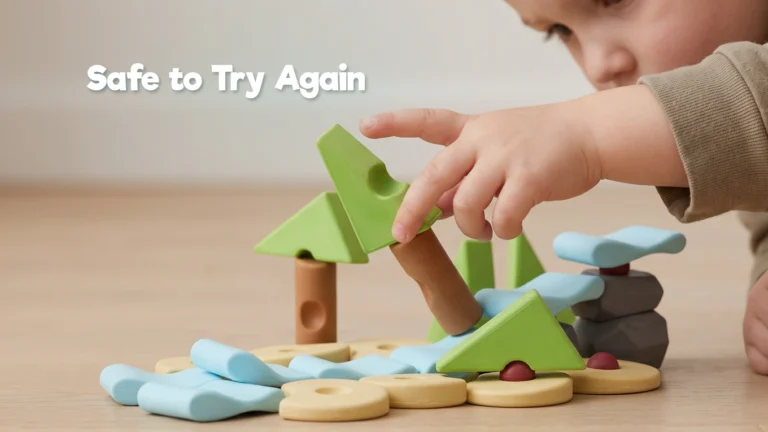
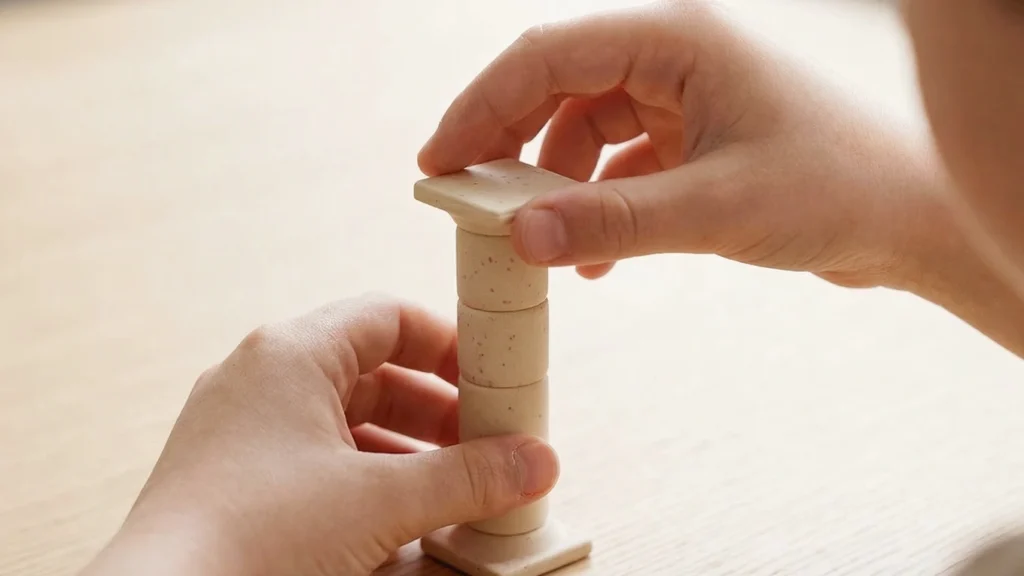
Open-ended building games, games with simple rules, and activities that require waiting, observing, and adjusting offer children a natural way to train their executive functions. The strongest moments are often simple: remembering a rule, pausing before moving, changing direction, or waiting for someone else to finish.
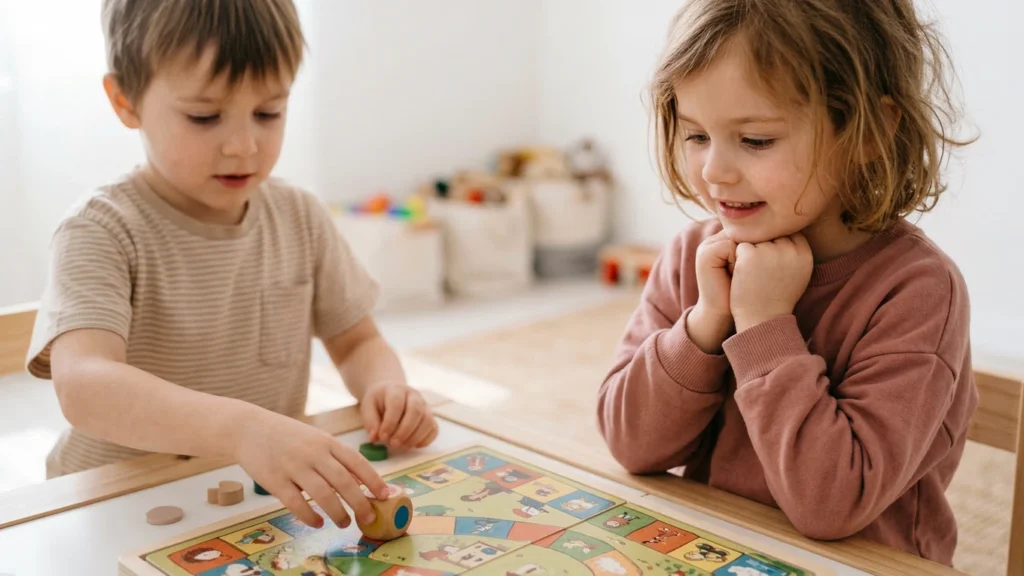
Look for play that asks children to remember and follow changing rules, freeze or stop on cue, match or recall a sequence, or take turns within a clear structure. These small forms of practice matter because they make regulation visible. The child sees the rule, feels the impulse, and gradually learns to adjust.
It also helps when the difficulty can change. A game that begins with one rule can later hold two. A short sequence can become longer. A child can grow into the challenge without being pushed beyond reach.nge, and pause before acting. The learning is visible in the action itself.
The Bigger Picture
Your child is not always giving you a hard time. Often, they are having a hard time with skills that take years to build. Every supported meltdown, every patient repetition, every routine practiced again, and every thoughtful game played together adds something to the structure.
Progress will not always look steady. Some days the tower runs smoothly. Other days, the systems feel scattered. Both are part of building something that will continue to serve the child long after the moment has passed.
*This article is for informational purposes only and does not constitute medical or therapeutic advice. If you have concerns about your child’s development, please consult a pediatrician or occupational therapist.*