How Gross Motor Skills Build Spatial Awareness in Children
Gross motor skills are often seen as running, jumping, climbing, or balancing. Yet beneath these large movements, children are also learning how their body relates to space. Each reach, step, push, and turn helps them understand distance, direction, force, balance, and the quiet boundaries between themselves and the world around them.
The Body as a Learning System
Before a child reads a word or solves a math problem, they are working through something more basic. They are learning where their body ends and where the world begins. They are mapping space through movement.
Gross motor skills and spatial awareness form part of the physical ground that many later abilities rest on. They are not isolated skills that children learn once and leave behind. They continue to shape how the brain organizes experience, how confidence grows, and how children learn to trust their own bodies.
When a child climbs, jumps, or reaches for something just beyond their grasp, they are doing more than using their muscles. They are building an internal sense of space, gravity, distance, and possibility.
How the Body Learns Where It Is
The brain does not automatically know where the body is. It learns this through repeated experience. Two sensory systems are especially important in this process, often working quietly in the background.
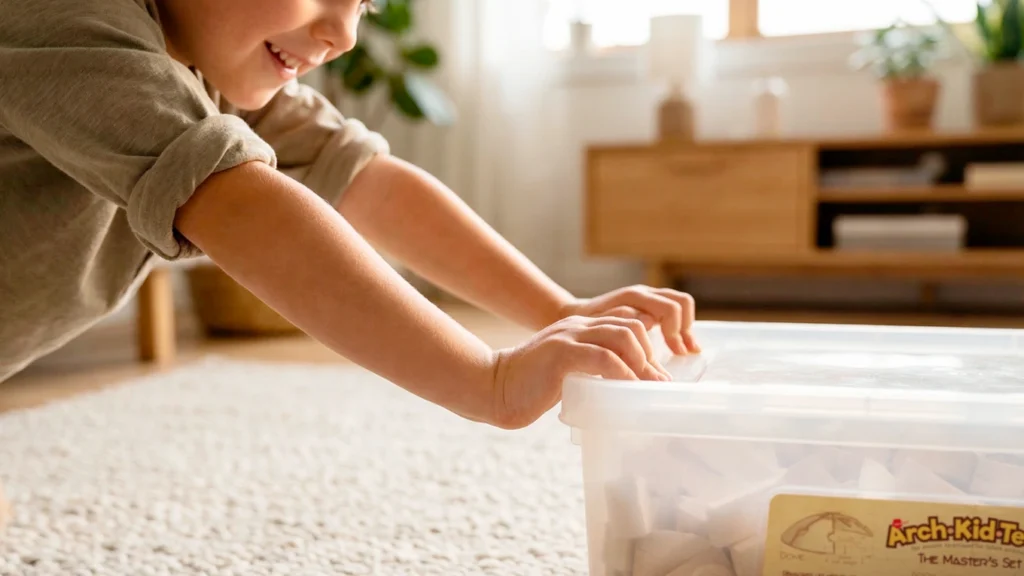
Proprioception is the body’s ability to sense its own position through the muscles, joints, and tendons. When a child carries something heavy, pushes against a firm surface, or stretches to reach an object, the body sends information to the brain about effort, resistance, and location. This kind of input helps children adjust movement, judge force, and settle into steadier control.
The vestibular system, located in the inner ear, helps the brain detect head position and movement. It tells the body whether it is upright, tilting, turning, or speeding up. Swinging, spinning, rolling, and balancing all give the vestibular system information that helps children understand motion and orientation.
The cerebellum, a structure at the base of the brain, helps coordinate these signals. It fine-tunes timing, force, and adjustment. When a child catches a ball, steps over an uneven surface, or changes direction while running, the cerebellum helps the body respond with more control.
Together, these systems help form what researchers sometimes call the body schema. This is not a fixed map. It keeps changing as the child moves, tests, falls, adjusts, and tries again.
Crossing the Invisible Line
One part of motor development that is easy to miss is midline crossing. The midline is an imaginary line that runs down the center of the body. When a child reaches across this line, both sides of the brain and body need to work together.
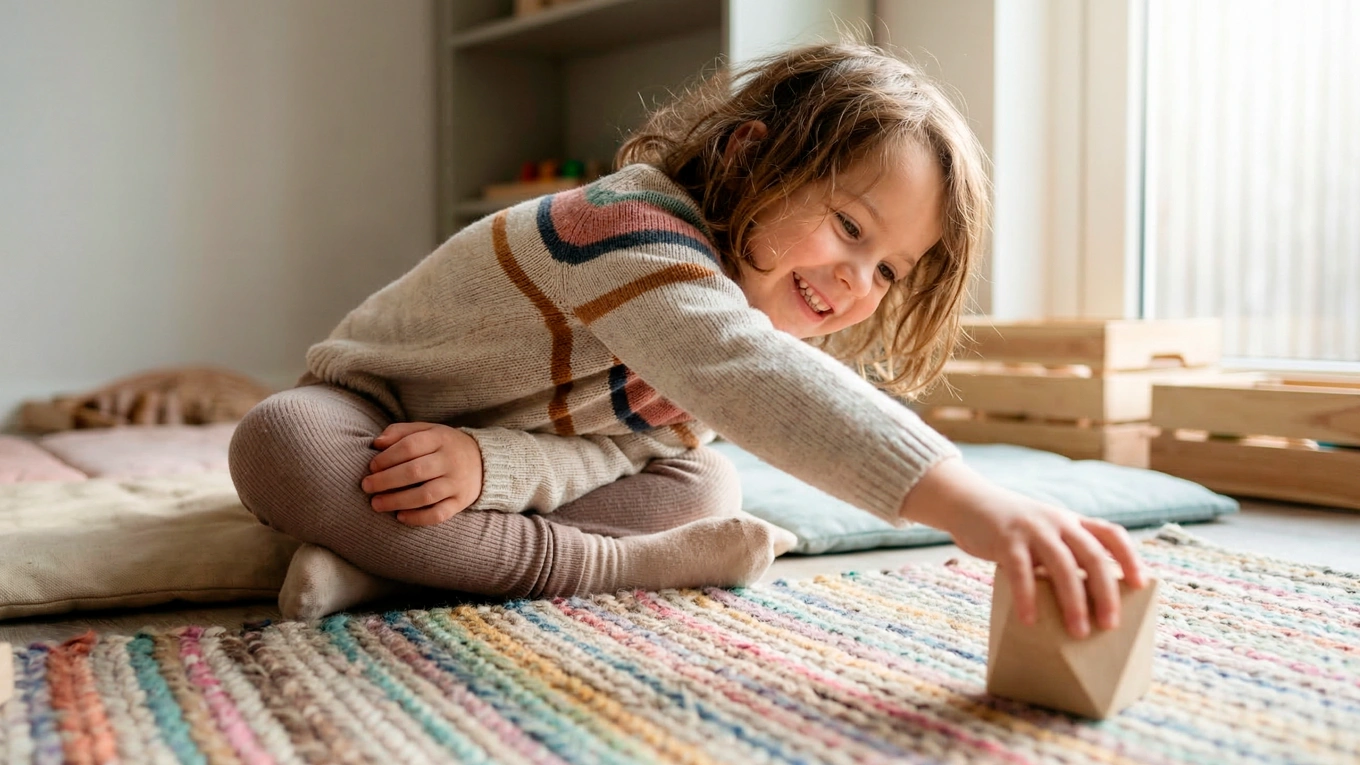
Crawling, climbing, reaching to the opposite side, twisting, or carrying objects across the body all invite this kind of coordination. These actions can help children build bilateral coordination, which is the ability to use both sides of the body in a connected way.
The relationship between midline crossing and later skills such as reading and writing is still complex. It should not be reduced to a simple promise. What parents and teachers can observe, however, is practical: movement that uses both sides of the body, especially in alternating or crossing patterns, gives children more chances to organize their body with control.
Paths to Development
The research points toward several kinds of movement that can help children build gross motor skills and spatial awareness. These are not strict instructions. They are invitations for children to move with variety and purpose.
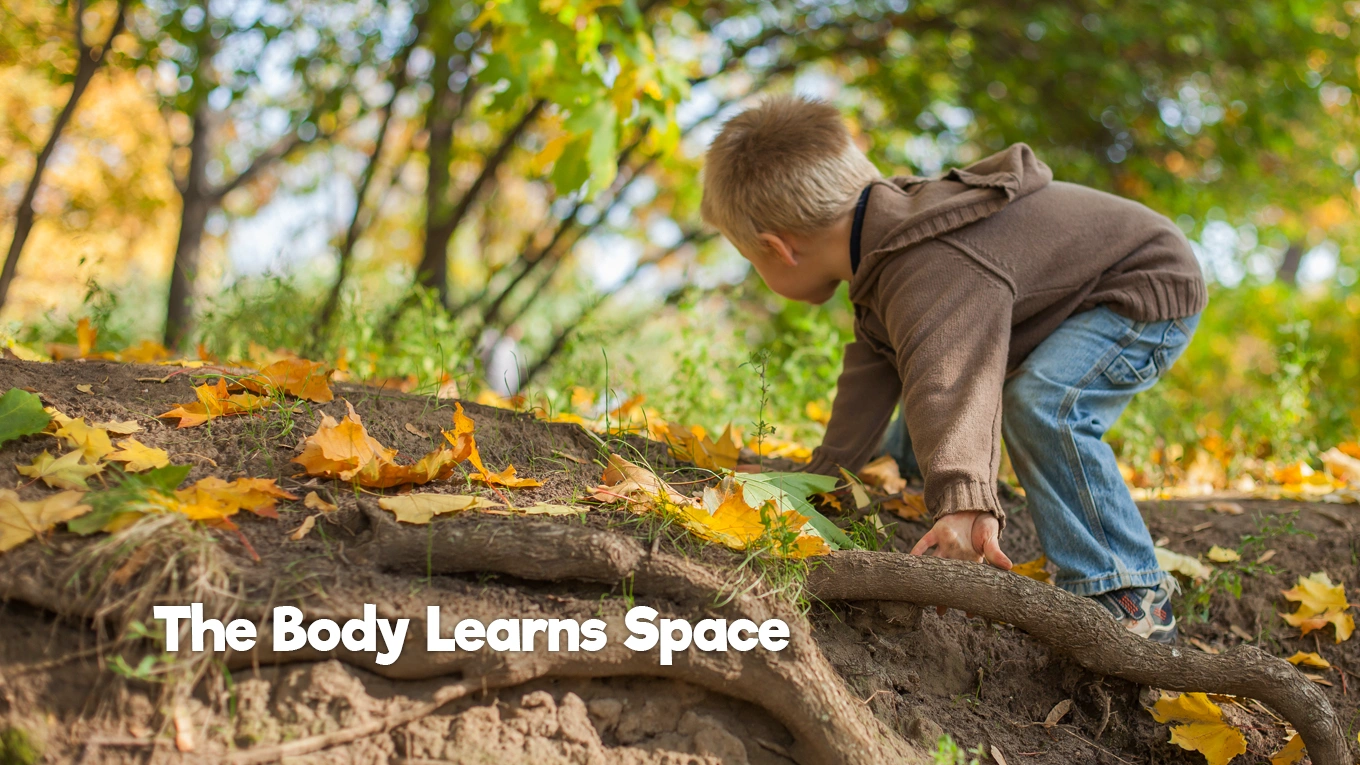
Climbing and descending. When children climb, they judge distance, plan where to place their hands and feet, and manage their body weight against gravity. Stairs, slopes, climbing frames, low walls, and trees all offer different versions of this experience.
Swinging and spinning. Rhythmic, turning, and back-and-forth movements give strong vestibular input. Swings, gentle spinning, rolling down a soft slope, or turning during play help the brain process motion and balance.
Carrying and pushing. Heavy work gives the body deep proprioceptive feedback. Carrying groceries, pushing a cart, moving cushions, or lifting large blocks helps children feel effort, weight, resistance, and position.
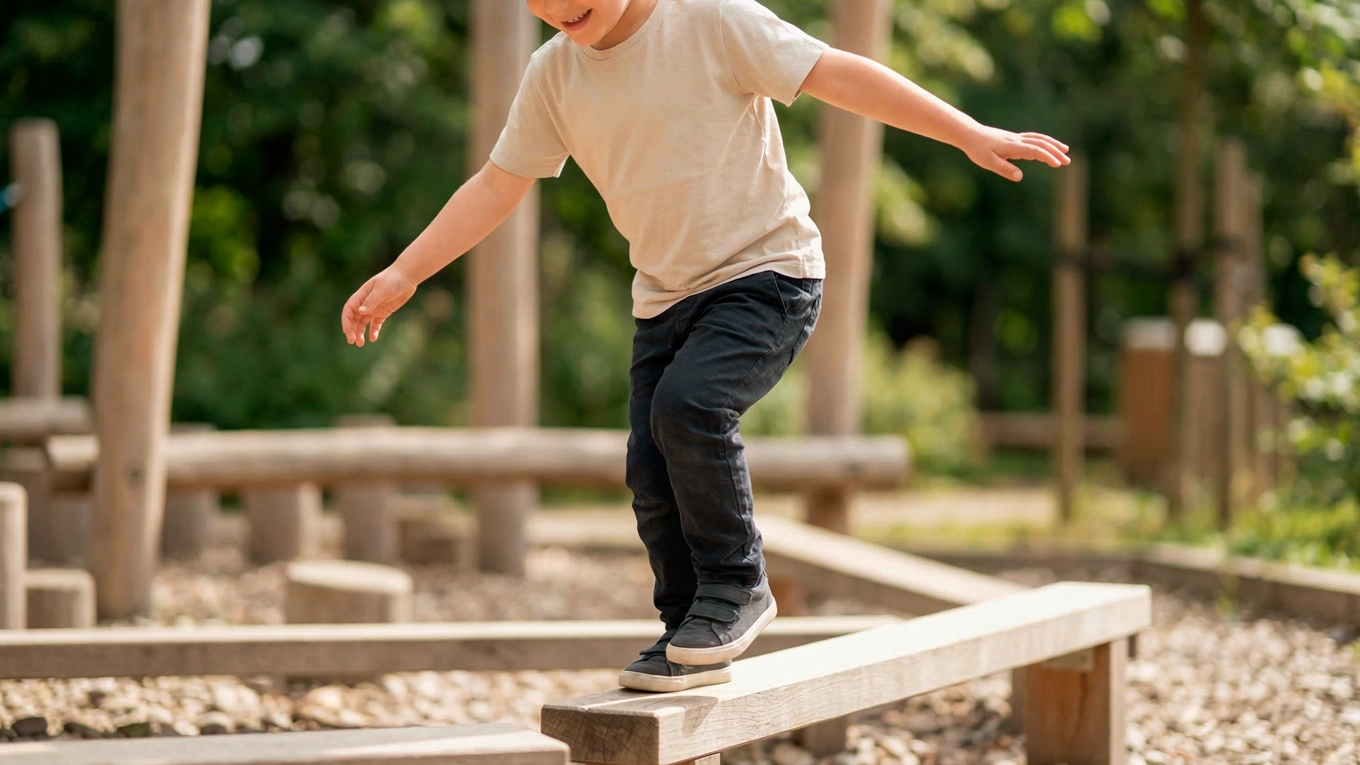
Balancing on varied surfaces. Walking on grass, sand, uneven ground, low beams, or soft mats asks the body to keep adjusting. These moments build postural control and help children sense how their body responds to change.
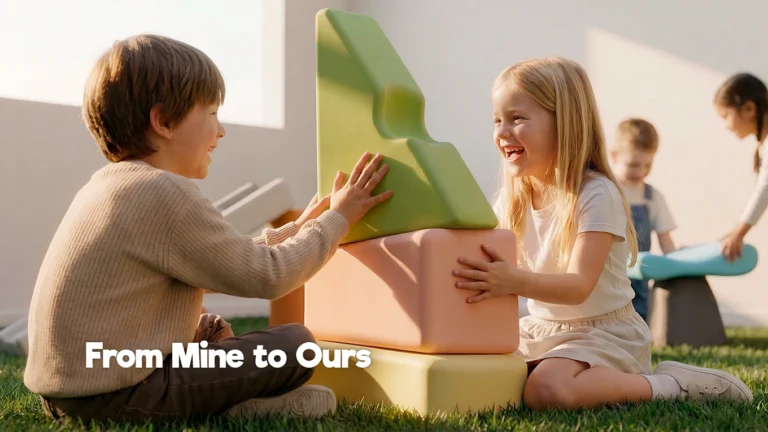
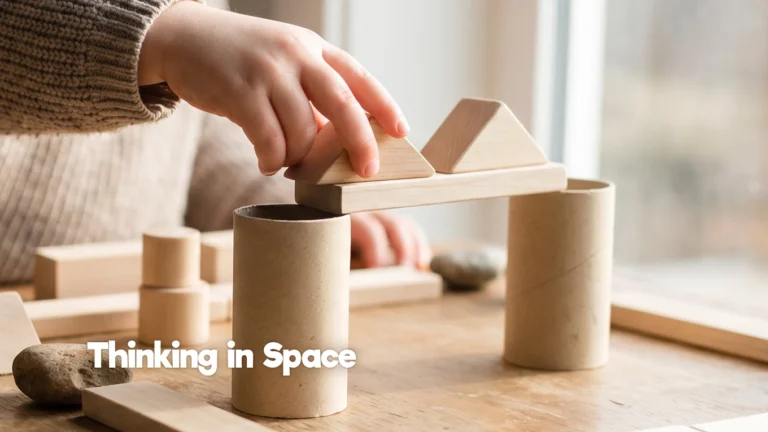
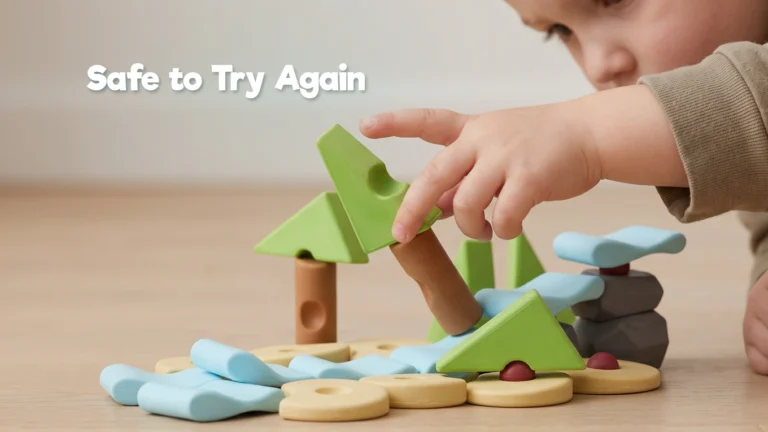
Building at body scale. When children build something large enough to move around, lean on, or step inside, spatial reasoning becomes physical. They begin to notice proportion, stability, placement, and their own relationship to the structure.
What the Environment Can Offer
Children do not need elaborate equipment to build these abilities. They need spaces that allow movement, variation, and a reasonable level of challenge.
Open areas give children room to run, roll, stop, turn, and change direction. Uneven surfaces such as grass, sand, and gentle slopes invite balance adjustments. Objects of different weights and sizes invite lifting, carrying, pushing, and problem-solving.
Climbing spaces should offer manageable risk. The goal is not danger, but the chance to look, judge, attempt, and adjust. Large loose materials can also be valuable because they ask children to use the whole body. A child who moves a block, shifts a base, or steadies a structure begins to feel the relationship between force, balance, and consequence.
A Quiet Foundation
Gross motor skills and spatial awareness are not always dramatic milestones. They may not appear as a single memorable achievement. Yet they form a quiet foundation beneath many parts of childhood.
A child who trusts their body in space is more willing to meet new physical challenges. A child who has moved across varied surfaces, carried weight, balanced, climbed, and adjusted has gathered information that cannot be taught only through words. And when children move, build, and balance alongside others, they also learn how to notice, wait, respond, and cooperate.
The body is not separate from learning. It is one of the first ways children come to understand the world.
*This article is for informational purposes only and does not constitute medical or therapeutic advice. If you have concerns about your child’s development, please consult a pediatrician or occupational therapist.*