Color and Shape Activity: Treasure Hunt with Resources®
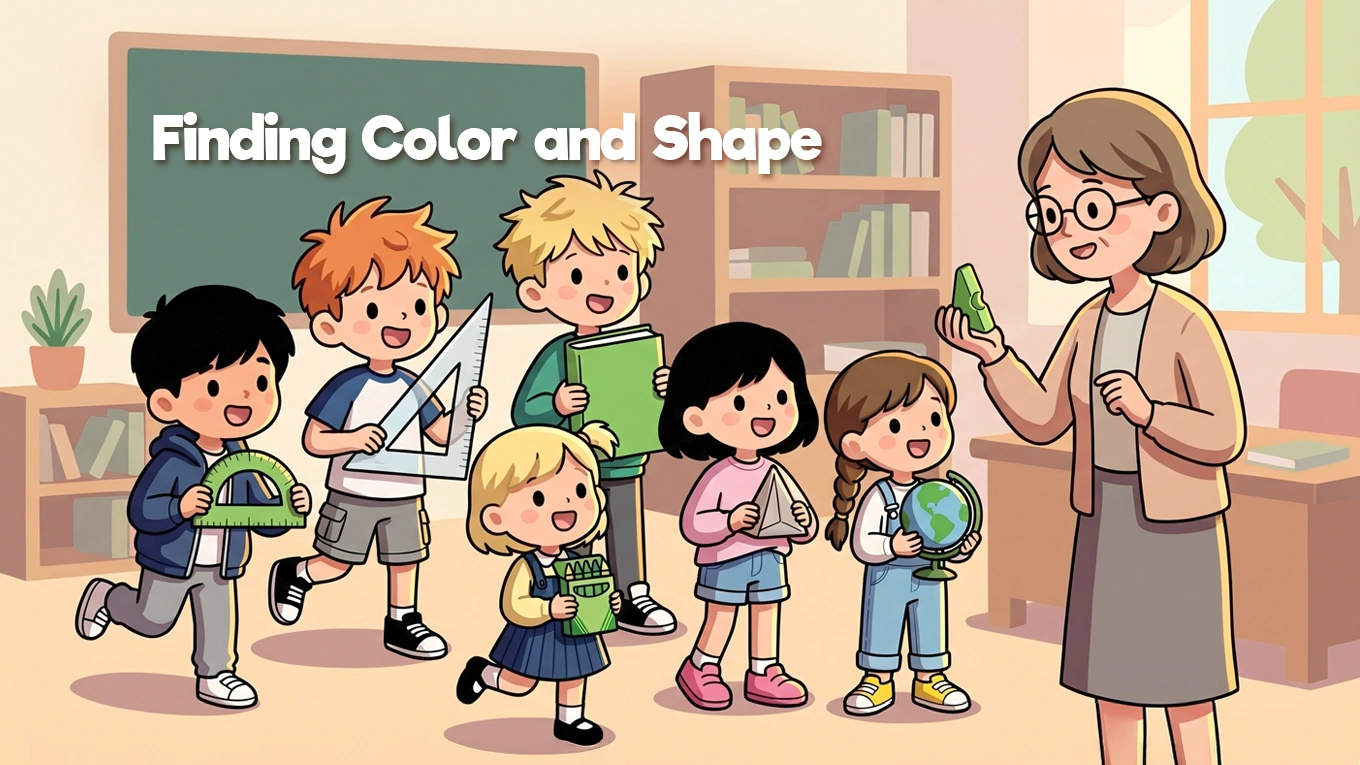
Color and Shape Activity: Treasure Hunt with Resources® is a play-based learning activity that uses Resources® pieces as starting points for observing color and shape in the room. Children begin with one piece, then move through the space to find something that shares the same color, the same shape, or both. As they look, compare, point, and explain what they notice, this color and shape treasure hunt turns familiar objects into visible examples of relationship, attention, and shared discovery.
The Set-up for the Color and Shape Treasure Hunt
Introduce the children as Resources® Scouts for this classroom treasure hunt. Their task is to look around the room and find an object that matches the assigned Resources® piece by color, by shape, or by both. One child might notice a chair with the same color. Another might find a clock with a similar round form. Another might find something that carries both attributes at once.
Before the search begins, create a few simple boundaries so the activity stays safe, focused, and calm.
Walking only.
The search should feel attentive, not rushed.
Look, point, and stay nearby.
Children do not need to bring the object back. They can point to it, stand beside it, or “park” near it. If another child is already beside the same object, they look again and choose something else.
A freeze signal.
Practice a clap, bell, or whistle before the activity begins. When children hear the signal, they pause where they are. This gives the adult a gentle way to reset the room if movement becomes too fast or several children gather around the same object.
How the Color and Shape Activity Unfolds
Target
Hold up one Resources® piece and say, “Find one thing in this room that has this color or this shape.” Give children a moment to look carefully before they move.
Discovery
Children search for around 60 seconds, or longer if the group needs more time. A child might stand beside a blue chair, a yellow pencil, a round clock, a square floor tile, or any other object that shares one visible attribute with the piece.
Share
Move around the room and invite a few children to explain what they found. A child might say, “I found a blue book,” or “This clock is round.” If a child chooses something that does not match the piece, guide their attention toward one visible feature. For example, “Look closely at the color,” or “Can you find something with a shape closer to this?”
Reset
Children return to the starting area. Hold up a new Resources® piece and begin again. With each round, they become more attentive to the details around them.
What This Supports
Generalization
Children may first understand a square as a plastic piece, a drawing in a book, or a named shape on a chart. They may also think of a color as something attached to one familiar object, such as a red block or a blue crayon. In this activity, they begin to see that the same attribute can appear in many places. A window, a book, and a floor tile may share a shape. A chair, a bag, and a pencil may share a color. The idea is no longer tied to one object. It becomes something they can recognize across the room.
Movement and memory
Young children often understand through the body before they can explain with words. Walking toward a blue chair, standing beside a round clock, or pointing to a yellow sign gives the idea a physical path. The child does not only hear the words “blue,” “circle,” or “same.” They move toward the match, locate it, and hold it in attention.
Visual discrimination
The room is full of possible distractions, from posters and bags to toys and furniture. The hunt asks children to filter what they see and search for one specific attribute. They are not looking at everything equally. They are comparing, narrowing, and choosing based on color, shape, or both.
Vocabulary in context
Instead of naming a piece in isolation, the activity creates a reason to describe what was found. An adult might ask, “What made you choose that clock?” and the child may answer, “Because it is round,” or “Because it is yellow like this piece.” The words are connected to observation, not memorization.
Self-regulation and focus
Each round gives children a simple mission with clear limits. They hold the target in mind, move through a shared space, and resist choosing objects that do not match. This asks for attention, memory, and control without turning the activity into a formal task.
Social noticing
Children also learn by watching one another. When one child stands beside a circular bin, another may notice a shape they had not considered before. When someone chooses a green coat instead of a green block, the group sees that color can connect very different objects. The discovery becomes shared. The room slowly fills with examples, and each child’s choice can help others see more carefully.
Every classroom and every child brings something different.
Share your adaptation or insight through Contribute a Reflection, and let the practice continue to grow.