Sorting Activity for Children: Rescuing Resources
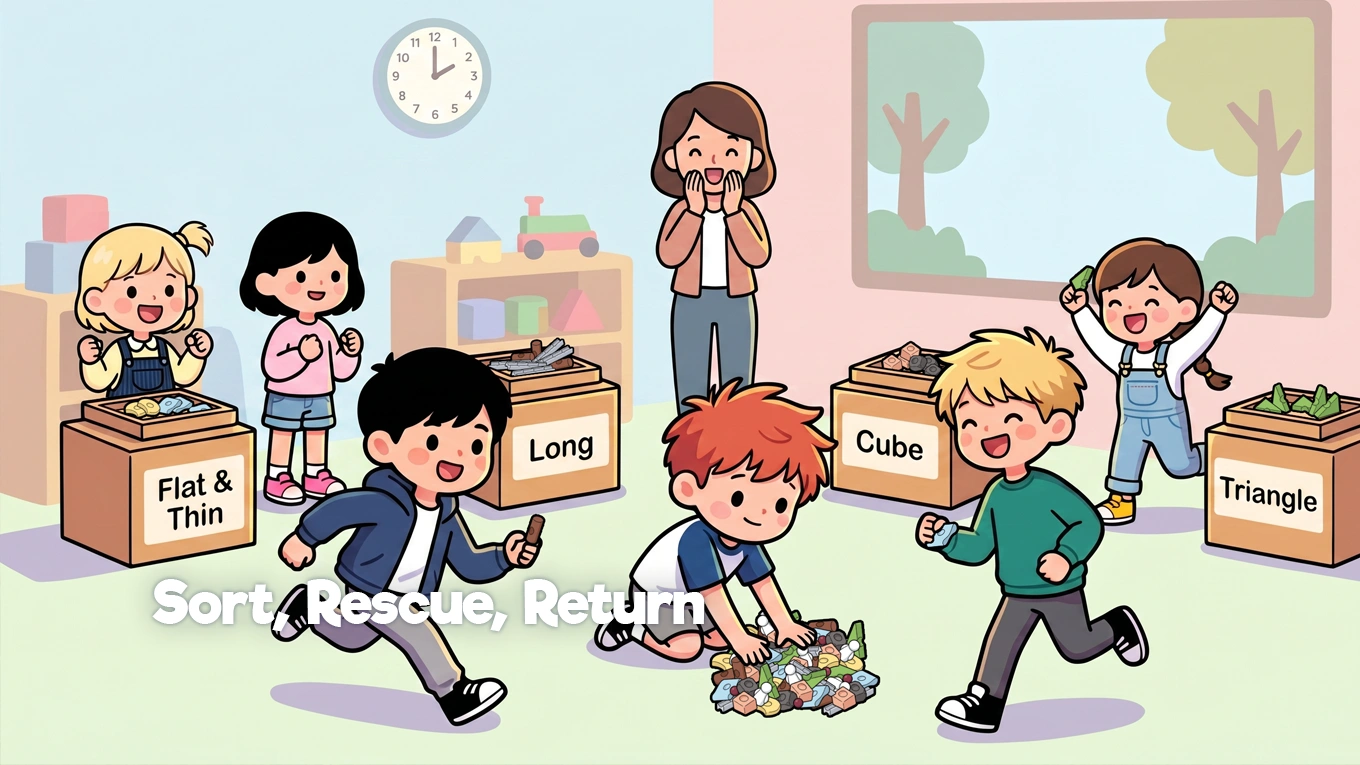
Rescuing Resources is a sorting activity for children that turns Resources® into a movement-based rescue game. Children run to the mixed pile, look closely at shape, size, edges, and surface qualities, then decide which piece belongs in their team’s safe zone. Through each turn, they practice noticing visual attributes, comparing one Resource with another, and seeing how a small choice can change the result of the group’s collection.
The Set-up
Place a large mixed pile of Resources® in the center of a rug or clear open space. This becomes the “Chaos Zone.”
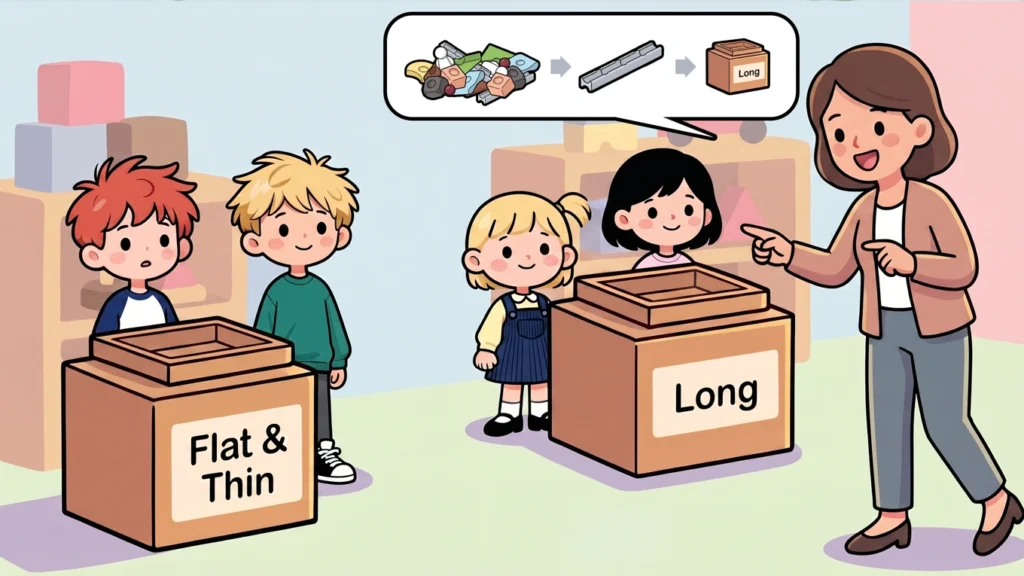
Place three to four bins or hoops around the room. These will become the teams’ safe zones.
Divide the group into a few teams. Give each team a specific rescue mission. For example, one team may rescue the flat and thin Resources®, another may rescue pieces without corners, and another may rescue the smallest pieces. The mission should be simple enough to remember, but specific enough to make children look carefully before choosing.
Set a timer for two to three minutes, or choose a short song and let the activity end when the song ends.
How It Unfolds
Start
Each team begins at its safe zone.
Dash
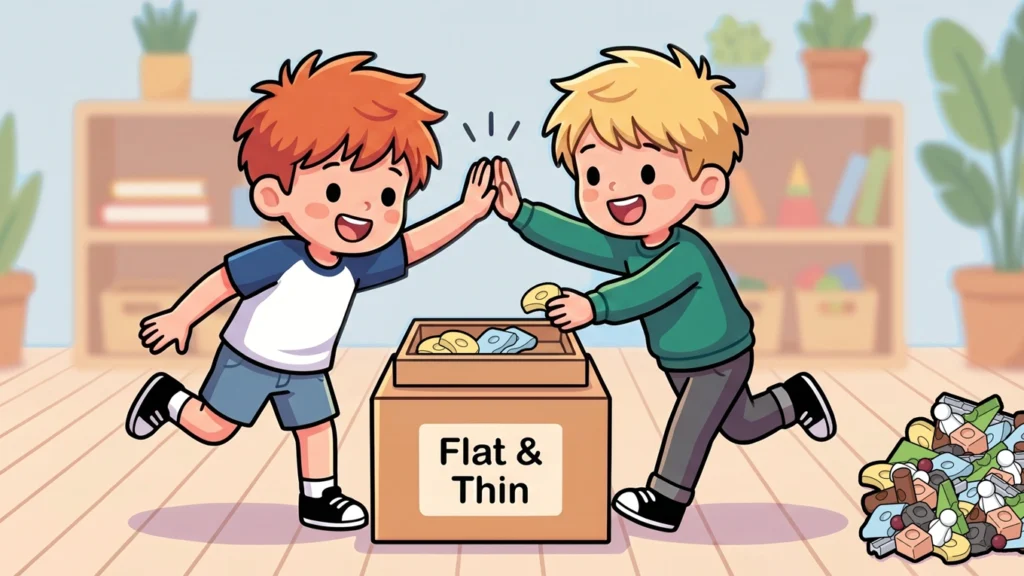
On the signal, one child from each team runs to the Chaos Zone, chooses one Resource that matches the team’s mission, and brings it back to the team’s bin.
Tag
The child tags the next teammate, who then runs to find the next piece.
Pause and Notice
From time to time, pause the activity with a whistle, a hand signal, or the word “freeze.” Everyone stops where they are. Walk around the bins and look at the collected pieces together. If a team has brought back a piece that does not match its mission, that piece can be returned to the center on the team’s next turn.
Finish
The activity ends when the timer is up. If you prefer not to use a timer, let the relay continue until all Resources® have been moved out of the Chaos Zone.
Rescue Review
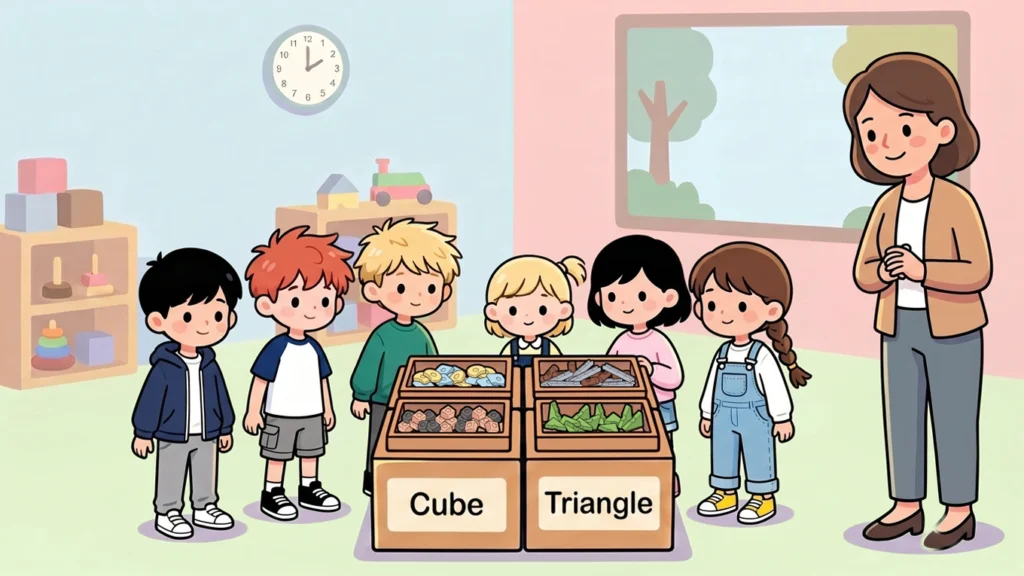
Bring the bins to the center and invite each team to look at what they collected. Ask simple questions that bring attention back to the pieces themselves: “What do these pieces have in common?” “Does this one belong with the others?” “Did any team rescue something that does not match its mission?” The review is not only about checking answers. It gives children a moment to slow down, compare, and explain what they noticed.
What This Supports
Rapid Visual Processing
In a quiet activity, children may have time to look closely before deciding. In a relay, they have to scan, compare, and choose quickly. This helps build visual fluency, the ability to recognize patterns and attributes with increasing ease. A child sees a shape, notices an edge, checks a surface, and makes a decision while the activity is still moving.
Collaborative Problem Solving
Because the activity belongs to the whole team, children often begin guiding one another. They may call out, “Find the round one,” or “That one has corners.” These moments matter because the children are using their own language to explain what they see. The idea becomes clearer when they have to help someone else notice it.
Gross Motor Movement and Body Awareness
Running, stopping, bending down, picking up a small object, and returning to the team all bring the body into the activity. Children also practice moving through shared space, noticing where other players are, and adjusting their path without bumping into them. The thinking is not separate from the movement. It happens while the body is responding.
Working Memory Under Pressure
Each child has to hold the team’s mission in mind while surrounded by movement, voices, and other possible choices. A child may be looking for the smallest piece, the pieces without corners, or the flat and thin ones. The challenge is not only to move quickly, but to remember what matters while the game is in motion.
Careful Speed and Sportsmanship
Winning and losing can feel important to young children. This activity gives them a safe way to practice both. It also shows that speed alone is not enough. A team has to move with energy, but also look with care. The correct piece matters as much as the fast return.
Every classroom and every child brings something different.
Share your adaptation or insight through Contribute a Reflection, and let the practice continue to grow.