Early Math Activity: The Resource Bakery
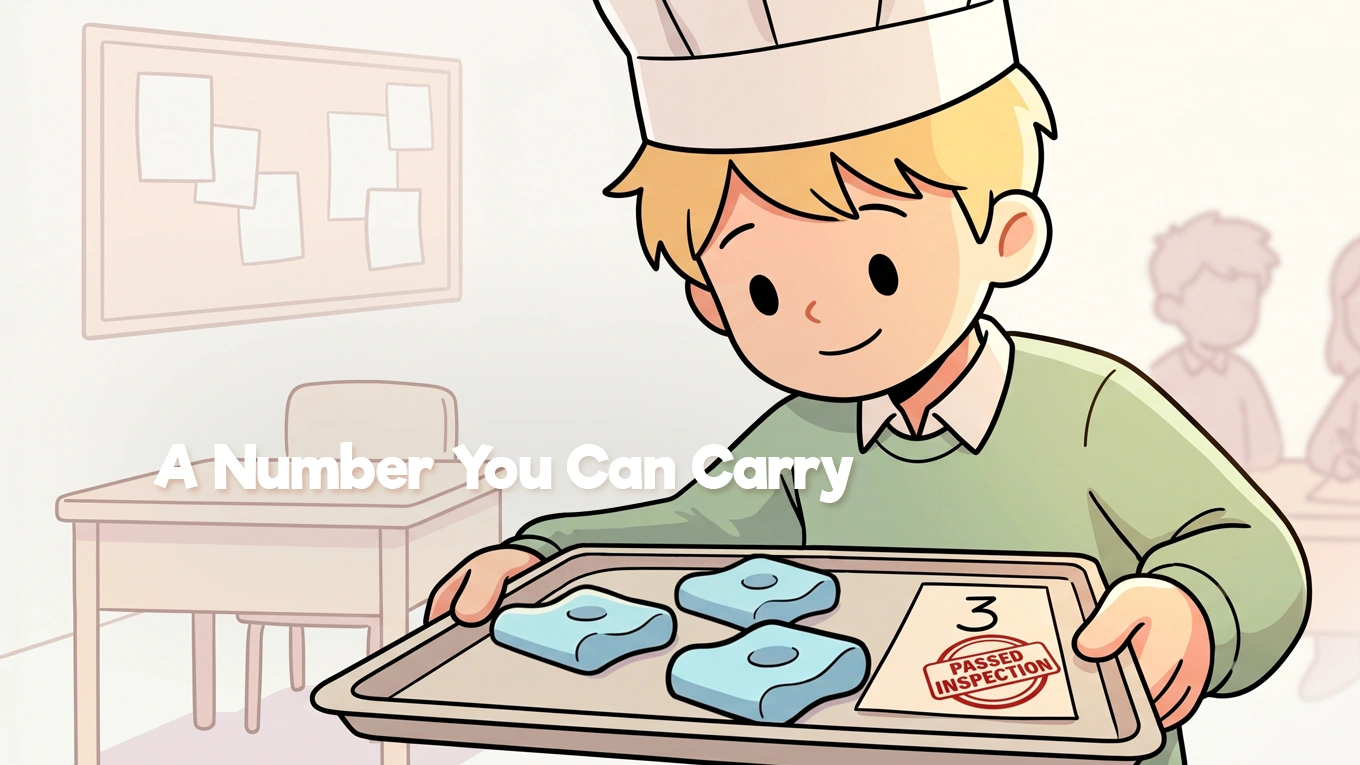
The Resource Bakery is an early math activity for preschoolers that uses Resources® as ingredients in a pretend bakery setting. Children read a simple order card, gather the right number and type of pieces, carry them carefully, and check whether the order matches what was requested. Through this small sequence, they begin to notice quantity, shape, color, and the relationship between a number and the objects in front of them.
The Set-Up
The Bakery Boxes
Prepare a paper plate or small tray for each child. This becomes the child’s bakery box, where each order is placed, carried, and checked.
Order Cards
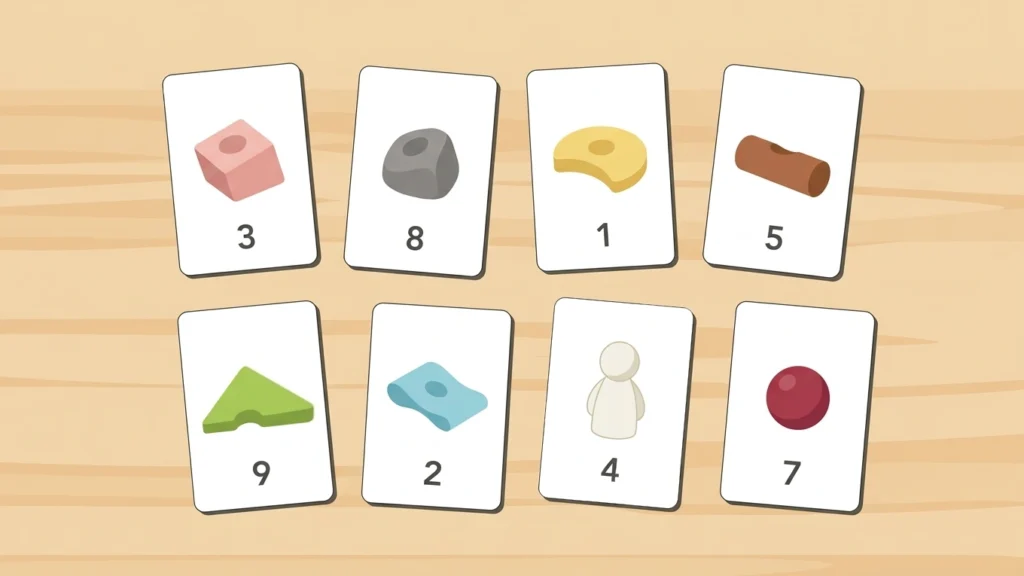
Create a simple deck of visual order cards.
- Level 1: Number + One Shape
For example: “4 Sands” - Level 2: The Combo
For example: “2 Waters + 3 Woods”
In the beginning, you may start with the Level 1 deck and introduce Level 2 later. You may also place both decks at the station and allow children to choose the level that feels manageable for them.
The Stations
Set up three stations on separate tables. Leave enough space between them so children can move without bumping into one another. The activity works best when the room has a simple flow. Each station gives the child one clear part of the process: choose, gather, then check.
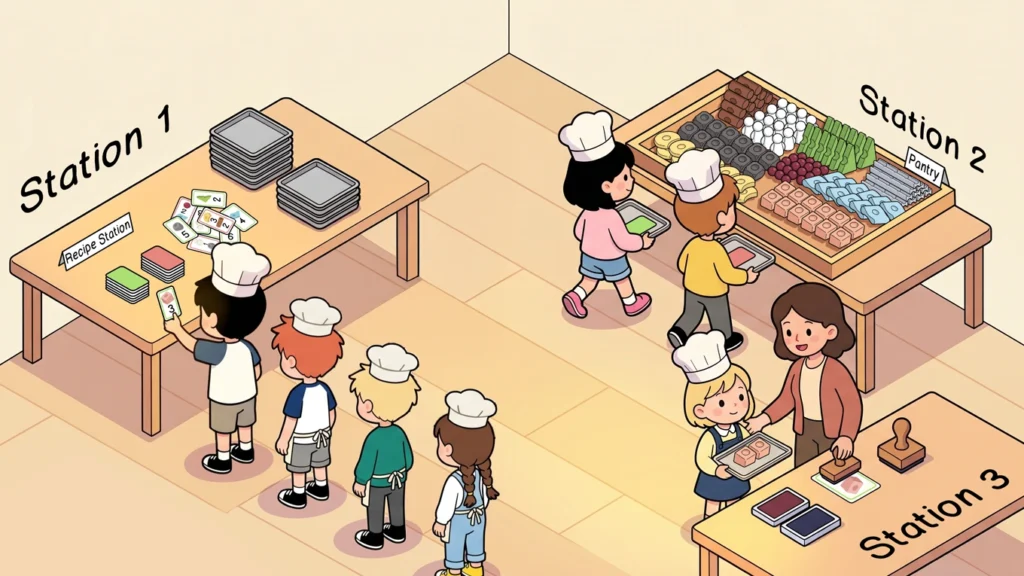
- Station 1: Order Station
Place the order card decks here, with a stack of trays beside them. - Station 2: The Pantry
Prepare bins of Resources®, sorted by color, shape, or another visible category. - Station 3: The Inspection Table
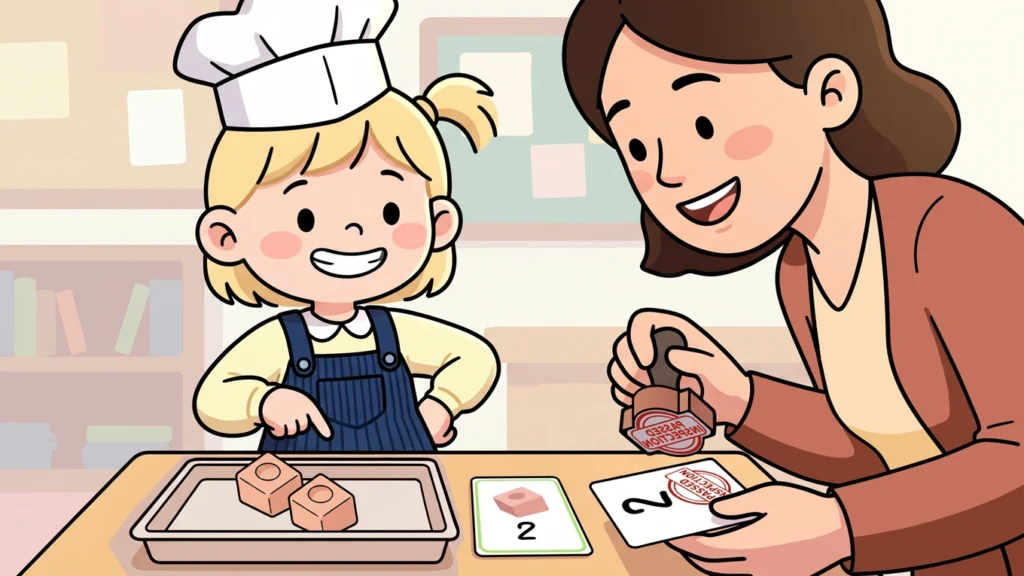
This is where the adult, teacher, or a peer checks the order with the child and notices whether the number of pieces matches the card.
Chef Hats, Optional
Paper headbands can help children step into the bakery role without changing the purpose of the activity.
Stickers or Stamps, Optional
Each child may carry a small paper with their name on it. A stamp or sticker can be added after each completed order, not as pressure to perform, but as a visible record of what they have carried, counted, and checked.
Rules to Establish
Walking Feet in the Bakery
To keep the pieces from spilling, bakers walk slowly between the pantry and their bakery station.
One Order at a Time
Each baker completes and delivers the current order before choosing a new card.
The Oven Rule
Ingredients stay on the plate. If a piece rolls away, the baker pauses, brings it back, and checks the order again.
Pro-Tips
Color-Code the Cards
Make Level 1 cards one color and Level 2 cards another, so children can see the difference and choose the challenge level with more independence.
The Pantry Manager
One child can take the role of Pantry Manager, helping return the Resources® to the correct bins and keeping the system ready for the next baker.
Storage Hack
Keep the order cards inside the Resources® storage box, so the activity can become an easy-to-prepare play-based learning center for future use.
How It Unfolds
Order Up, Station 1
The child, now the Baker, goes to the order station and draws one order card. They read the order aloud in their own way, such as, “I need five green rectangles.” The card is then placed face down on the tray, becoming the order they need to remember and complete.
Gathering Ingredients, Station 2
The Baker carries the tray to the pantry and selects the exact Resources® pieces needed for the order. This is where the number begins to connect with physical action. The child counts, chooses, adjusts, and carries the ingredients back to their bakery station.
The Inspection Table, Station 3
When the tray is ready, the Baker walks to the inspection table. The adult, teacher, or a peer checks the order with them. Rather than correcting from a distance, count together by pointing to each piece: “One, two, three…” The child sees the count unfold through touch, voice, and placement.
The inspection is not a test. It is a pause where the child can look again, count again, and see whether the order holds together.
The Delivery
Once the order is checked, the Baker delivers it by returning the pieces to the pantry. A stamp or sticker may be added here if you are using them. Then the child chooses a new card and begins another order.
The Silly Baker Variation
From time to time, the adult can step in as the Silly Baker. Look at a tray and say, “Oh no, this order says 4, but I think I see 5. Is one of these a secret snack?” This gives the child a reason to check again with care. The focus stays on noticing and adjusting, not on being right or wrong.
What This Supports
One-to-One Correspondence
Many young children can recite numbers in order, almost like a song, before they fully understand how each number connects to an object. In this activity, the child picks up one piece for each count. The word “three” becomes three visible pieces on a tray, not only a sound in a sequence.
Subitizing, or Recognizing Small Groups
After repeated play, some children begin to recognize small quantities without counting every piece one by one. A group of two or three starts to appear as a whole. This quiet shift matters because it prepares children to see number relationships with more ease.
Cardinality, or the Final Number Rule
Young learners may count “one, two, three, four, five,” then start again when asked, “How many?” The bakery setting gives them repeated chances to notice that the last number said tells the total amount in the order.
Informal Addition and Composition
Level 2 cards introduce the idea of building a larger set from smaller groups. When a child gathers 2 Waters and 3 Woods, they are meeting the beginning of addition through action, not through a worksheet. The total is formed by placing, counting, and seeing the groups come together.
Multi-Step Executive Function
The activity asks the child to hold several parts of a process at once. They look at a card, remember the order, move to another place, choose the right pieces, carry them back, and check the result. The sequence is simple, but it gives the child a real reason to plan, pause, and verify.
Every classroom and every child brings something different.
Share your adaptation or insight through Contribute a Reflection, and let the practice continue to grow.