Child Self-Regulation and Why Children Have Meltdowns
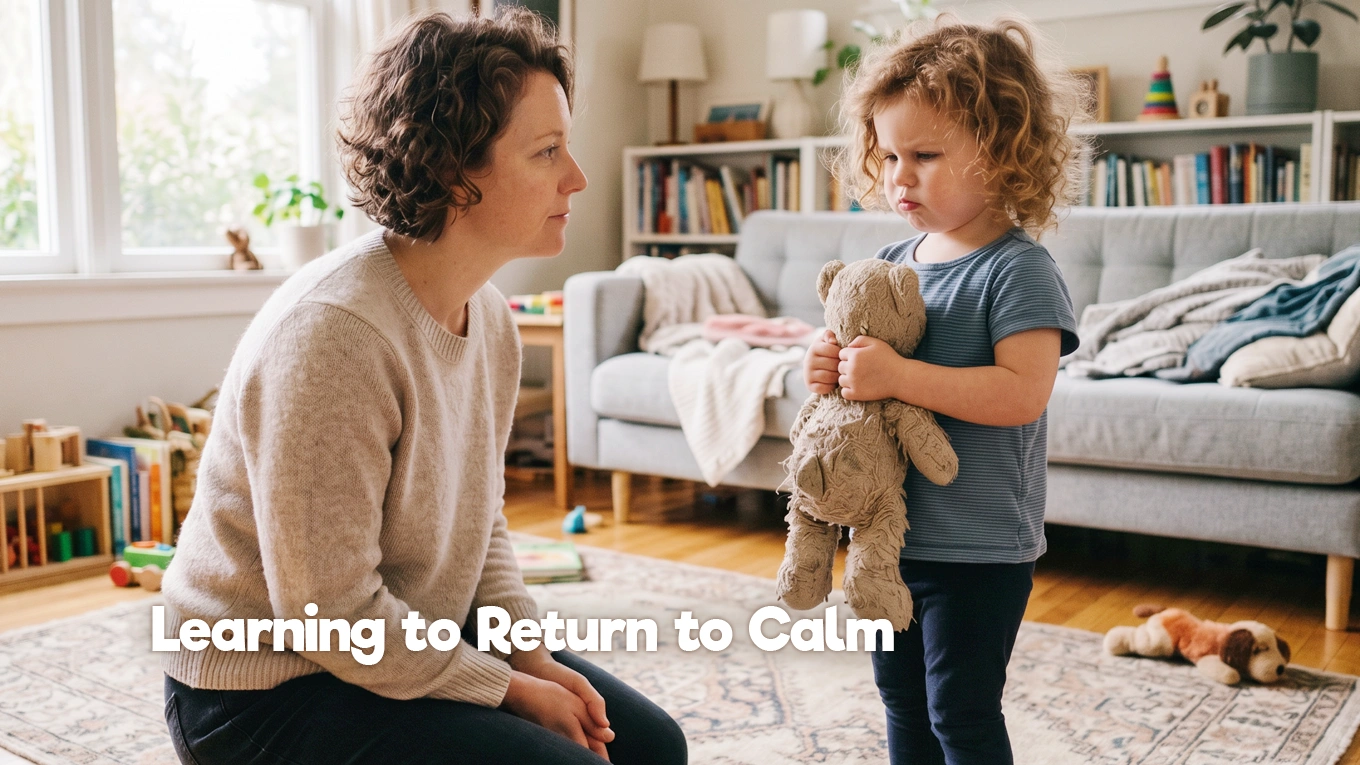
Child self-regulation is not something children simply have or do not have. It develops slowly, through the body, the brain, and repeated experiences with calm adults. When a child melts down over a cookie, a lost game, or a small change in routine, the moment may look like defiance from the outside. Often, it is a child meeting a feeling that is still larger than their ability to hold.
Why Your Child Is Not Giving You a Hard Time
Picture this: your toddler is crying in the grocery store because you said no to a cookie. Or your preschooler has thrown a toy across the room after losing a game. In these moments, it can feel as if both of you are caught in the same storm.
A helpful reframe is this: your child is not giving you a hard time. They are having a hard time. Beneath the noise and resistance is one of the most important skills children gradually build in early childhood: child self-regulation. It begins with support from an adult and grows slowly through repeated moments of practice.
Child self-regulation is the growing ability to manage emotions, behavior, and physical impulses. It is what later helps a child wait for a turn, recover after disappointment, and pause before acting. These abilities support friendships, learning, and emotional resilience, but they do not appear all at once. They are practiced again and again, often in the very moments that feel most difficult.
The Science Behind the Meltdowns
A Brain Still Under Construction
The prefrontal cortex is the part of the brain involved in planning, impulse control, and thinking through consequences. It works like a thoughtful manager, but in young children, this manager is still developing.
This matters. When a three-year-old grabs a sibling’s toy or cannot stop crying after a change in plan, they are not simply choosing not to control themselves. Their brain is still building the pathways needed for that kind of control. What looks small to an adult may require a level of regulation the child is still learning to reach.
When the Body Hits the Panic Button
Young children also have sensitive stress response systems. When they feel threatened, frustrated, tired, hungry, or overwhelmed, the body may respond quickly. The heart beats faster. Muscles tense. Stress hormones rise. Logical thinking becomes harder to access.
This is why explaining, negotiating, or asking too many questions often does not work during the height of a meltdown. The child’s body is trying to find safety before the thinking brain can return. In that moment, the first task is not to teach a lesson. It is to help the body settle enough to listen.
Your Calm Becomes Their Calm

Before children can regulate themselves, they often need to experience regulation with an adult. This is called co-regulation.
Co-regulation does not mean removing every boundary or giving in to every request. It means lending steadiness when the child does not yet have enough of their own. A quiet voice, a slower breath, a lowered body position, or a simple phrase can become a signal: you are safe, and I am here.
Over time, repeated experiences of being met with calm help children build their own internal patterns. The relationship becomes part of the learning process.
Putting This Into Practice
Understanding the science is useful, but the real work happens in ordinary moments. Child self-regulation grows through repeated experiences that are simple, steady, and close to daily life.
Stay anchored during storms. When your child is overwhelmed, your presence matters more than your explanation. Lower your body to their level. Speak softly. Breathe slowly. This does not ignore the behavior. It shows the child what regulation can look and feel like.
Name emotions together. After the intensity has passed, help your child connect words to what happened. Keep the language simple: “You were really angry when the tower fell.” Naming a feeling gives it shape. Over time, this helps children notice what is happening inside them before it becomes too large.

Practice calming strategies when things are peaceful. Teaching deep breathing during a meltdown is like teaching swimming in rough water. Practice when the body is calm. Blow bubbles slowly. Pretend to smell a flower. Make a pinwheel turn with a long breath. Small repeated practices become easier to reach when emotions rise.
Build predictable rhythms. Transitions are often difficult for young children because they require stopping one action and shifting to another. Simple warnings, such as “Five more minutes, then we clean up,” can help the child prepare. Consistent routines reduce some of the uncertainty that can lead to overwhelm.
Expect setbacks. Self-regulation does not develop in a straight line. Sleep, hunger, illness, sensory overload, or changes at home can make regulation harder. A difficult day does not mean progress has disappeared. It means the child needs more support for that moment.
Comfort Tools
Certain objects can support the calming strategies described above. The most useful tools are not defined by brand or novelty, but by how they help a child notice, slow down, and return to the body.

Items that offer deep pressure. A weighted lap pad or weighted stuffed animal can give some children a grounded sensation. Choose items that are appropriately sized and weighted for the child’s body.
Soothing tactile materials. Soft, natural, or textured fabrics and toys help children slow down. They offer a comforting point of focus for busy hands, opening up a gentle space for storytelling, imagination, and putting feelings into words.
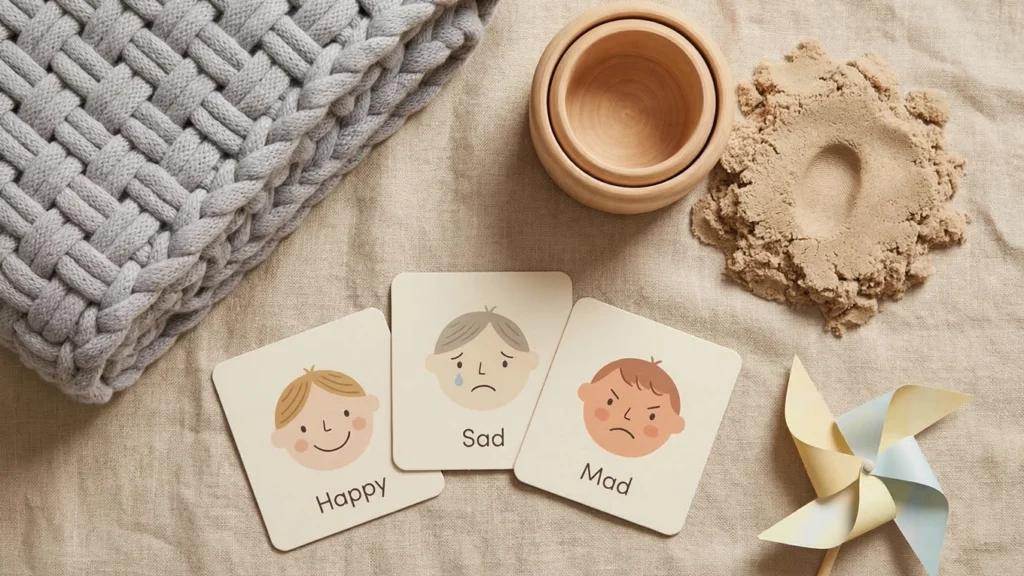
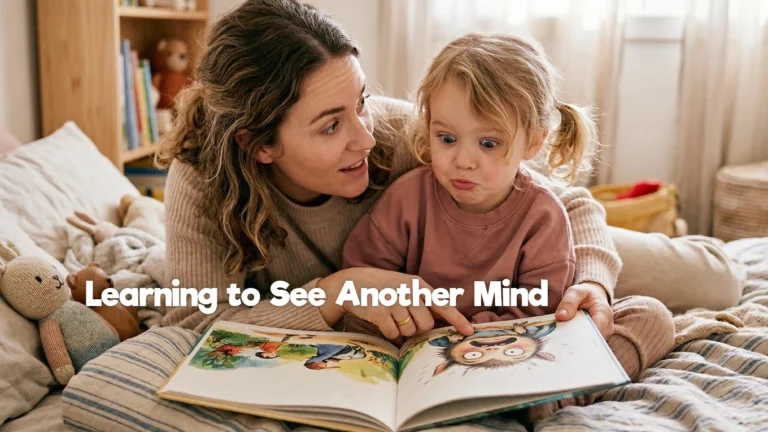
Emotion cards or books. Visual tools with facial expressions and feeling words help children build emotional vocabulary. Look for clear images and simple language that match the child’s age.
Slow, focused toys. Nesting cups, simple puzzles, kinetic sand, or molding dough invite repeated, rhythmic movement. These actions can gently slow both the hands and the mind.
Breathing aids. Bubbles, pinwheels, or expandable balls make breathing visible. For young children, seeing the breath move something can make an abstract instruction more concrete.
On Hard Days
Learning self-regulation is a long process. There will be difficult mornings, public meltdowns, and moments when you wonder whether anything is changing. This is part of the work for both adult and child.
What children need most is not a perfect parent or teacher. They need a steady one. Someone who can return, repair, and try again. In time, those repeated moments become part of how a child learns to pause, feel, recover, and keep going.
*This article is for informational purposes only and does not constitute medical or therapeutic advice. If you have concerns about your child’s development, please consult a pediatrician or occupational therapist.*